Part One of a Six Part Series.
Jim and I have been fighting for education reform and education spending reform for almost 6 years now. We fully believe that schools have a spending problem and not a funding problem. Our techniques for fighting referenda can be found on our old website Citizens for Reasonable And Fair Taxes. Jim's Boston Tea Party describes tax fighting methods we've employed in the past. Such methods are also effective against excessive tax warrants.
The Minnesota Association of School Administrators felt our techniques were so successful they developed the Rapid Referendum Response. What to do when your district is blindsided by anti-referendum attacks.
MASA's Rapid Referendum Response booklet cover includes "How school districts can deal with organized referendum opposition while keeping their eyes on the prize: a high-quality of educational environment for all students." Referenda are about money and money only (hence the "prize") By now I hope you all know that there is no link between education spending and performance.
Saturday, May 31, 2008


Estabrook's last stand: Barring the schoolhouse door
The following piece appeared in the Union Leader. The piece is so well written no commentary is needed readers should go to the Union Leader website to see a number of really great comments by Union Leader readers.
The editorial strongly mirrors both Jim's and my views on said subjects.
Estabrook's last stand: Barring the schoolhouse door
SEN IRIS ESTABROOK, D-Durham, is retiring from the state Senate at the end of this session. In what may be her last major act as chairman of the Senate Education Committee, she spent days this week blocking an important amendment on public kindergarten that was requested by local communities.
The Legislature has mandated that every school district in the state provide publicly funded kindergarten. Only a dozen districts do not offer public kindergarten, primarily because voters have rejected it. But the Democrat-controlled Legislature doesn't care what the local communities want. The Democrats want public kindergarten in every community, so they have decreed that it will be so.
Some communities complained that they could not possibly get new kindergarten buildings up and running by the Legislature's 2009 deadline. So the House passed a sensible revision: districts can meet the kindergarten mandate by tuitioning their students to a private kindergarten.
Estabrook has stated that she wants kindergarten programs offered through the public school system, and nothing else will do. It's her way or the highway -- again, no matter what the local parents and educators want.
It is fitting that probably her last major effort as Senate Education Committee chairman is to block local communities' attempts to have their children attend kindergarten programs chosen by the local community. It is just the latest in her many attempts to deny choice to parents and students, forcing them to stay in public schools that often don't work for them, for the sole reason that those schools are run by the public education monopoly.
On the bright side, parents and students in New Hampshire can hope that Estabrook's replacement in the Senate will be more interested in educating children than in keeping them trapped inside a 19th-century-style factory school system that works for only some of them.
Quote of the Day - "This source of corruption, alas, is inherent in the democratic system itself, and it can only be controlled, if at all, by finding ways to encourage legislators to subordinate ambition to principle."
James L. Buckley
The editorial strongly mirrors both Jim's and my views on said subjects.
Estabrook's last stand: Barring the schoolhouse door
SEN IRIS ESTABROOK, D-Durham, is retiring from the state Senate at the end of this session. In what may be her last major act as chairman of the Senate Education Committee, she spent days this week blocking an important amendment on public kindergarten that was requested by local communities.
The Legislature has mandated that every school district in the state provide publicly funded kindergarten. Only a dozen districts do not offer public kindergarten, primarily because voters have rejected it. But the Democrat-controlled Legislature doesn't care what the local communities want. The Democrats want public kindergarten in every community, so they have decreed that it will be so.
Some communities complained that they could not possibly get new kindergarten buildings up and running by the Legislature's 2009 deadline. So the House passed a sensible revision: districts can meet the kindergarten mandate by tuitioning their students to a private kindergarten.
Estabrook has stated that she wants kindergarten programs offered through the public school system, and nothing else will do. It's her way or the highway -- again, no matter what the local parents and educators want.
It is fitting that probably her last major effort as Senate Education Committee chairman is to block local communities' attempts to have their children attend kindergarten programs chosen by the local community. It is just the latest in her many attempts to deny choice to parents and students, forcing them to stay in public schools that often don't work for them, for the sole reason that those schools are run by the public education monopoly.
On the bright side, parents and students in New Hampshire can hope that Estabrook's replacement in the Senate will be more interested in educating children than in keeping them trapped inside a 19th-century-style factory school system that works for only some of them.
Quote of the Day - "This source of corruption, alas, is inherent in the democratic system itself, and it can only be controlled, if at all, by finding ways to encourage legislators to subordinate ambition to principle."
James L. Buckley
Friday, May 30, 2008
Granholm's Tax Warning - A Tax Warning for New Hampshire
During the last couple of years I have been working on my families genealogy. I became interested in genealogy because as a child my mother told me I was related to the Presidents John Adams and John Quincy Adams.
It appears that tax fighting is genetically encoded in me as Sam Adams and I our distant cousins, we share a great grandmother. My extended family has been in New Hamsphire and Massachusetts for well over 400 years.
Cathy
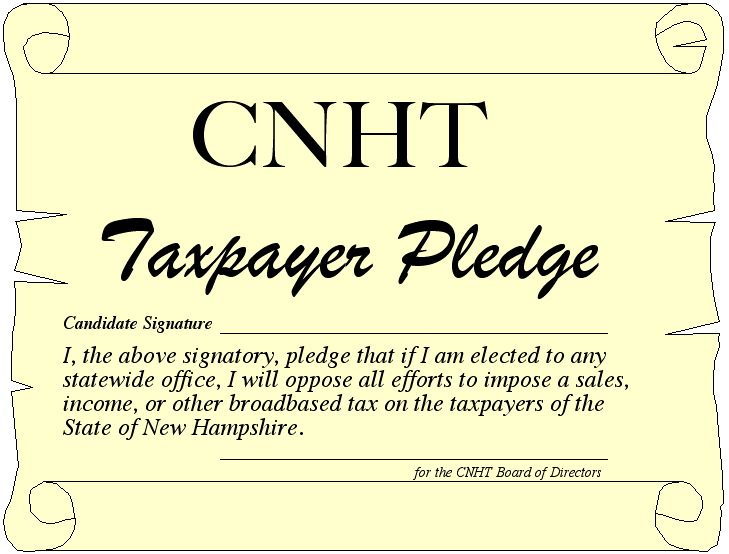
With the current trend by tax-eaters to get legislators to reject the tax pledge people should be aware of what will happen if a broad based tax or income tax is passed. An income tax will not reduce your overall tax liability but will insure a larger group of tax-eaters through increased state, county and school employees. These groups will continue to spend at rates greater than the rate of inflation and will request even more tax increases in the future. The larger these groups become the more lobbying power they will have to push through more taxes.
Hat tip to our friend Pete the finance guy for the following piece which appeared in the Wall Street Journal.
Granholm's Tax Warning
May 28, 2008
It's no fun to kick a state when it's down - especially when the local politicians are doing a fine job of it - but the latest news of Michigan's deepening budget woe is a national warning of what happens when you raise taxes in a weak economy.
Officials in Lansing reported this month that the state faces a revenue shortfall between $350 million and $550 million next budget year. This is a major embarrassment for Governor Jennifer Granholm, the second-term Democrat who shut down the state government last year until the Legislature approved Michigan's biggest tax hike in a generation. Her tax plan raised the state income tax rate to 4.35% from 3.9%, and increased the state's tax on gross business receipts by 22%. Ms. Granholm argued that these new taxes would raise some $1.3 billion in new revenue that could be "invested" in social spending and new businesses and lead to a Michigan renaissance.
Not quite. Six months later one-third of the expected revenues have vanished as the state's economy continues to struggle. Income tax collections are falling behind estimates, as are property tax receipts and those from the state's transaction tax on home sales.
Michigan is now in the 18th month of a state-wide recession, and the unemployment rate of 6.9% remains far above the national rate of 5%. Ms. Granholm blames the nationwide mortgage meltdown and higher energy prices for the job losses and disappearing revenues, but this Great Lakes state is in its own unique hole. Nearby Illinois (5.4% jobless rate) and even Ohio (5.6%) are doing better.
Leon Drolet, the head of the Michigan Taxpayers Alliance, complains that "we are witnessing the Detroit-ification of Michigan." By that he means that the same high tax and spend policies that have hollowed out the Motor City are now infecting many other areas of the state.
The tax hikes have done nothing but accelerate the departures of families and businesses. Michigan ranks fourth of the 50 states in declining home values, and these days about two families leave for every family that moves in. Making matters worse is that property taxes are continuing to rise by the rate of overall inflation, while home values fall. Michigan natives grumble that the only reason more people aren't blazing a path out of the state is they can't sell their homes. Research by former Comerica economist David Littmann finds that about the only industry still growing in Michigan is government. Ms. Granholm's $44.8 billion budget this year further fattened agency payrolls.
There's another national lesson from the Granholm tax dud. If Democrats believe that anger over the economy and high gas prices have put voters in a receptive mood for higher taxes, they should visit the Wolverine State.
Just a few weeks ago taxpayer advocates collected enough signatures in suburban Detroit for a ballot initiative to recall powerful Speaker of the House Andy Dillon, who was one of last year's tax-hike ringleaders. Voters seem to think there would be rough justice if for once politicians, rather than workers, lose their jobs from higher taxes.
If I paid my taxes as carelessly and dishonestly as the politicians spend them, I would have been in jail long since. – Richard Needham
It appears that tax fighting is genetically encoded in me as Sam Adams and I our distant cousins, we share a great grandmother. My extended family has been in New Hamsphire and Massachusetts for well over 400 years.
Cathy
With the current trend by tax-eaters to get legislators to reject the tax pledge people should be aware of what will happen if a broad based tax or income tax is passed. An income tax will not reduce your overall tax liability but will insure a larger group of tax-eaters through increased state, county and school employees. These groups will continue to spend at rates greater than the rate of inflation and will request even more tax increases in the future. The larger these groups become the more lobbying power they will have to push through more taxes.
Hat tip to our friend Pete the finance guy for the following piece which appeared in the Wall Street Journal.
Granholm's Tax Warning
May 28, 2008
It's no fun to kick a state when it's down - especially when the local politicians are doing a fine job of it - but the latest news of Michigan's deepening budget woe is a national warning of what happens when you raise taxes in a weak economy.
Officials in Lansing reported this month that the state faces a revenue shortfall between $350 million and $550 million next budget year. This is a major embarrassment for Governor Jennifer Granholm, the second-term Democrat who shut down the state government last year until the Legislature approved Michigan's biggest tax hike in a generation. Her tax plan raised the state income tax rate to 4.35% from 3.9%, and increased the state's tax on gross business receipts by 22%. Ms. Granholm argued that these new taxes would raise some $1.3 billion in new revenue that could be "invested" in social spending and new businesses and lead to a Michigan renaissance.
Not quite. Six months later one-third of the expected revenues have vanished as the state's economy continues to struggle. Income tax collections are falling behind estimates, as are property tax receipts and those from the state's transaction tax on home sales.
Michigan is now in the 18th month of a state-wide recession, and the unemployment rate of 6.9% remains far above the national rate of 5%. Ms. Granholm blames the nationwide mortgage meltdown and higher energy prices for the job losses and disappearing revenues, but this Great Lakes state is in its own unique hole. Nearby Illinois (5.4% jobless rate) and even Ohio (5.6%) are doing better.
Leon Drolet, the head of the Michigan Taxpayers Alliance, complains that "we are witnessing the Detroit-ification of Michigan." By that he means that the same high tax and spend policies that have hollowed out the Motor City are now infecting many other areas of the state.
The tax hikes have done nothing but accelerate the departures of families and businesses. Michigan ranks fourth of the 50 states in declining home values, and these days about two families leave for every family that moves in. Making matters worse is that property taxes are continuing to rise by the rate of overall inflation, while home values fall. Michigan natives grumble that the only reason more people aren't blazing a path out of the state is they can't sell their homes. Research by former Comerica economist David Littmann finds that about the only industry still growing in Michigan is government. Ms. Granholm's $44.8 billion budget this year further fattened agency payrolls.
There's another national lesson from the Granholm tax dud. If Democrats believe that anger over the economy and high gas prices have put voters in a receptive mood for higher taxes, they should visit the Wolverine State.
Just a few weeks ago taxpayer advocates collected enough signatures in suburban Detroit for a ballot initiative to recall powerful Speaker of the House Andy Dillon, who was one of last year's tax-hike ringleaders. Voters seem to think there would be rough justice if for once politicians, rather than workers, lose their jobs from higher taxes.
If I paid my taxes as carelessly and dishonestly as the politicians spend them, I would have been in jail long since. – Richard Needham
Thursday, May 29, 2008
All in the Fam...: Note to Subway: It's Too Late
I just want to say my problem with Subway's apology is the following line "Our intention was to provide an opportunity for traditional schools, many of which we know have trouble affording athletic equipment, to win equipment."
That line honks me off because public schools have a spending problem and not a funding problem. Maybe if there were not so many educrats in schools, schools could afford to buy athletic equipment.
I think Subway has taken enough heat for their gaffe and any public school people who feel sorry for them should patronize Subway more.
I think it is time to close the whole "subwaygate" story with some very well written thoughts from the following BLOG.
All in the Fam...: Note to Subway: It's Too Late
John Hingley said...
Well, it looks like Subway finally did issue an apology (sort of):
http://www.subway.com/Applications/CustService/frmCustomerService.aspx
My name is John Hingley and I am the CEO at Andiamo Systems, a social media measurement company. We advise on basic 'rules of engagement' when it comes to Reputation Management, many that Subway violated. Some of these rules include:
1) Issue a timely response or you will appear guilty and/or insensitive to the issue.
Subway took too much time with their somewhat weak statement.
2) Have the response come from a responsible person with authority.
Their statement was not signed off by anyone!
3) If you were wrong, admit it. And explain how you are addressing a resolution.
Clearly Subway skirted any type of genuine apology.
These are just a few, but some of the most important rues to abide by if a company truly cares about their reputation and brand value.
That line honks me off because public schools have a spending problem and not a funding problem. Maybe if there were not so many educrats in schools, schools could afford to buy athletic equipment.
I think Subway has taken enough heat for their gaffe and any public school people who feel sorry for them should patronize Subway more.
I think it is time to close the whole "subwaygate" story with some very well written thoughts from the following BLOG.
All in the Fam...: Note to Subway: It's Too Late
John Hingley said...
Well, it looks like Subway finally did issue an apology (sort of):
http://www.subway.com/Applications/CustService/frmCustomerService.aspx
My name is John Hingley and I am the CEO at Andiamo Systems, a social media measurement company. We advise on basic 'rules of engagement' when it comes to Reputation Management, many that Subway violated. Some of these rules include:
1) Issue a timely response or you will appear guilty and/or insensitive to the issue.
Subway took too much time with their somewhat weak statement.
2) Have the response come from a responsible person with authority.
Their statement was not signed off by anyone!
3) If you were wrong, admit it. And explain how you are addressing a resolution.
Clearly Subway skirted any type of genuine apology.
These are just a few, but some of the most important rues to abide by if a company truly cares about their reputation and brand value.
HSLDA on WNTK
Subway Apologizes
Subway Apologizes
HSLDA is pleased to pass along the following apology from Subway restaurants.
To HSLDA:
We at SUBWAY restaurants place a high value on education, regardless of the setting, and have initiated a number of programs and promotions aimed at educating our youth in the areas of health and fitness.
We sincerely apologize to anyone who feels excluded by our current essay contest. Our intention was to provide an opportunity for traditional schools, many of which we know have trouble affording athletic equipment, to win equipment. Our intent was certainly not to exclude homeschooled children from the opportunity to win prizes and benefit from better access to fitness equipment.
To address the inadvertent limitation of our current contest and provide an opportunity for even more kids to improve their fitness, we will soon create an additional contest in which homeschooled students will be encouraged to participate. When the kids win, everyone wins!
HSLDA is pleased to pass along the following apology from Subway restaurants.
To HSLDA:
We at SUBWAY restaurants place a high value on education, regardless of the setting, and have initiated a number of programs and promotions aimed at educating our youth in the areas of health and fitness.
We sincerely apologize to anyone who feels excluded by our current essay contest. Our intention was to provide an opportunity for traditional schools, many of which we know have trouble affording athletic equipment, to win equipment. Our intent was certainly not to exclude homeschooled children from the opportunity to win prizes and benefit from better access to fitness equipment.
To address the inadvertent limitation of our current contest and provide an opportunity for even more kids to improve their fitness, we will soon create an additional contest in which homeschooled students will be encouraged to participate. When the kids win, everyone wins!
Homeschoolers are a powerful group!
According to the Home School Legal Defense Association 10 states allow homeschoolers to educate their children in total freedom with no regulation from their state government. Fifteen states have the requirement of parental notification only. The remaining 25 states have moderate to high regulation.
Homeschoolers are a large group and when motivated can be very successful when initiating change but all too often homeschoolers sadly go for appeasement or sticking their heads in the sand.
In New Hampshire with SB 337 we are taking a step backwards. Some feel appeasement is best. Many homeschoolers, homeschool because they want to provide the best education possible for their children. Granite Staters should fight for what is best for our children and that is total freedom from regulation from our state so that we may focus more energy on actually educating our children. If large states and blue states such as Texas, Illinois, Michigan and New Jersey can have total freedom to educate their children why can't we here in New Hampshire work for the same?
The following outstanding piece appears on the American Thinker website.

May 27, 2008
Subway Bans Homeschooled Kids from Essay Contest
By Ned Barnett
Subway -- the multi-national fast-food sub-shop giant -- has shot themselves in the foot. Again. The goal of their latest promotion was to win the loyalty of parents of grade school-aged kids -- to increase market share, revenue and profits. It was supposed to be a simple exercise in business marketing and promotion.
The outcome, however, was far different. By banning homeschooled kids -- children who are educated at home, as an alternative to public schooling -- Subway has ignited a firestorm of opposition from a vocal segment of the marketplace. Homeschoolers, offended by the ban, spontaneously -- and almost literally overnight -- organized a national Subway boycott that already has Subway's corporate spokesman hunkering down. All this happened over a holiday weekend, a time when people usually have better things to do. Imagine the impact today when millions of homeschooling parents are back in front of their computers, and discover what Subway has done to them.
America currently has something on the order of three million children being homeschooled; those children represent an adult purchasing population -- including parents and grandparents -- of well over five million often affluent people. Homeschooling parents are frequently supported by their local churches, and many other potential Subway customers -- who are not themselves homeschoolers -- still admire the self-reliant spirit reflected by these parents. These Americans might willingly join in a boycott against firms that show disrespect for homeschoolers.
Subway, by this careless -- or intentional -- ban on homeschooled children, could have easily offended 10 million American adults. Oops.
But why is this snub at homeschoolers even an issue? Homeschoolers face constant harassment from "officials" at the state and local school board level, as well as from teachers unions, and they are therefore more than a bit sensitive to perceived commercial discrimination. By banning homeschooled children from their essay contest, Subway has -- accidentally or intentionally -- placed themselves firmly in the "enemy's camp."
School boards generally oppose homeschooling, and the National Educational Association and other teachers unions relentlessly lobby against homeschooling, for two reasons.
First, homeschooling parents -- by teaching three million kids nationwide -- replace the equivalent of 100,000 union teachers.
Second, Federal and State public school financing is based on per-enrolled student -- and both the teachers unions and the school boards see homeschooling parents as literally taking federal funds out of their coffers or paychecks.
True, these schools don't have to provide services for homeschooled children, but with a strong entitlement mentality, the school boards and teachers unions adopt the position that they are "owed" this money. They fight in every way they can to hang onto every last dollar, and if this means opposing homeschooling or school vouchers, so be it.
But how did Subway get into this mess? Subway's "Every Sandwich Tells a Story" essay contest, conducted in cooperation with the quickly repentant Scholastic News Service -- which sells strongly into the homeschool market and which immediately and publicly apologized when this issue came to their attention -- specifically bans homeschooled kids from the contest. The remarkably poorly-spelled rules read:
NO PURCHASE NECESSARY TO ENTER OR WIN. Contest is open only to legal residents of the Untied (sic) States who are currently over the age of 18 and have children who attend elementary, private or parochial schools that serve grades PreK-6. No home schools will be accepted.
You'd think Subway would learn. In late 2004, 50 of their German franchisees created a table-top in-store ad that showed an obese Statue of Liberty. This promotion was tied into the German release of the film "Super Size Me," and it boldly mocked Americans' proclivity for eating fattening fast foods. Subway's decision-makers apparently thought that nobody outside their German franchised Subway stores would notice this anti-American in-store ad -- but within days, Congressman Tom DeLay was denouncing Subway from the well of the House, waving the table-top ad before the cameras for all to see. Outraged Americans -- who objected to an American company publicly mocking America in Europe, just to make a quick Euro -- quickly abandoned Subway in droves.
With this PR blunder, Subway quite possibly helped kindle the skyrocketing growth of Quiznos, a competing sub-sandwich shop that caught on almost immediately after Subway's "gaffe."
Faced with 24/7 media coverage and a virtual Internet firestorm of protest that was melting their market share, Subway's response was glacial. The story simmered for close to two weeks before Subway's spokespersons began to try to turn down the heat -- but by then, the damage had been done.
History may be repeating itself. Subway's partner, Scholastic, quickly backed away from the contest, publishing this apology on a number of homeschool websites and discussion boards:
"Our intention was never to make independent schooled children feel discriminated against or excluded from this specific promotion ... and will make sure eligibility is open to everyone in future promotions."
Except to say, "Unfortunately, I do not have enough information at this point to respond," when asked to comment on this homeschooling brouhaha, Subway's spokesman, Kevin Kane did respond to this gathering crisis. If history does repeat itself, Subway will stonewall for another couple of weeks before trying to ease the pain of this self-inflicted wound. And, as with their 2004 "Fat American" in-store promotion, which backfired so painfully, their response may yet again be too little, too late.
Ned Barnett is a political strategist and the owner of Barnett Marketing Communications in Las Vegas, Nevada. A PR crisis management expert, Barnett has been a university professor and has written nine published books on public relations and marketing communications, and writes a regular column on crisis PR for the International Association of Business Communicators.
Homeschoolers are a large group and when motivated can be very successful when initiating change but all too often homeschoolers sadly go for appeasement or sticking their heads in the sand.
In New Hampshire with SB 337 we are taking a step backwards. Some feel appeasement is best. Many homeschoolers, homeschool because they want to provide the best education possible for their children. Granite Staters should fight for what is best for our children and that is total freedom from regulation from our state so that we may focus more energy on actually educating our children. If large states and blue states such as Texas, Illinois, Michigan and New Jersey can have total freedom to educate their children why can't we here in New Hampshire work for the same?
The following outstanding piece appears on the American Thinker website.

May 27, 2008
Subway Bans Homeschooled Kids from Essay Contest
By Ned Barnett
Subway -- the multi-national fast-food sub-shop giant -- has shot themselves in the foot. Again. The goal of their latest promotion was to win the loyalty of parents of grade school-aged kids -- to increase market share, revenue and profits. It was supposed to be a simple exercise in business marketing and promotion.
The outcome, however, was far different. By banning homeschooled kids -- children who are educated at home, as an alternative to public schooling -- Subway has ignited a firestorm of opposition from a vocal segment of the marketplace. Homeschoolers, offended by the ban, spontaneously -- and almost literally overnight -- organized a national Subway boycott that already has Subway's corporate spokesman hunkering down. All this happened over a holiday weekend, a time when people usually have better things to do. Imagine the impact today when millions of homeschooling parents are back in front of their computers, and discover what Subway has done to them.
America currently has something on the order of three million children being homeschooled; those children represent an adult purchasing population -- including parents and grandparents -- of well over five million often affluent people. Homeschooling parents are frequently supported by their local churches, and many other potential Subway customers -- who are not themselves homeschoolers -- still admire the self-reliant spirit reflected by these parents. These Americans might willingly join in a boycott against firms that show disrespect for homeschoolers.
Subway, by this careless -- or intentional -- ban on homeschooled children, could have easily offended 10 million American adults. Oops.
But why is this snub at homeschoolers even an issue? Homeschoolers face constant harassment from "officials" at the state and local school board level, as well as from teachers unions, and they are therefore more than a bit sensitive to perceived commercial discrimination. By banning homeschooled children from their essay contest, Subway has -- accidentally or intentionally -- placed themselves firmly in the "enemy's camp."
School boards generally oppose homeschooling, and the National Educational Association and other teachers unions relentlessly lobby against homeschooling, for two reasons.
First, homeschooling parents -- by teaching three million kids nationwide -- replace the equivalent of 100,000 union teachers.
Second, Federal and State public school financing is based on per-enrolled student -- and both the teachers unions and the school boards see homeschooling parents as literally taking federal funds out of their coffers or paychecks.
True, these schools don't have to provide services for homeschooled children, but with a strong entitlement mentality, the school boards and teachers unions adopt the position that they are "owed" this money. They fight in every way they can to hang onto every last dollar, and if this means opposing homeschooling or school vouchers, so be it.
But how did Subway get into this mess? Subway's "Every Sandwich Tells a Story" essay contest, conducted in cooperation with the quickly repentant Scholastic News Service -- which sells strongly into the homeschool market and which immediately and publicly apologized when this issue came to their attention -- specifically bans homeschooled kids from the contest. The remarkably poorly-spelled rules read:
NO PURCHASE NECESSARY TO ENTER OR WIN. Contest is open only to legal residents of the Untied (sic) States who are currently over the age of 18 and have children who attend elementary, private or parochial schools that serve grades PreK-6. No home schools will be accepted.
You'd think Subway would learn. In late 2004, 50 of their German franchisees created a table-top in-store ad that showed an obese Statue of Liberty. This promotion was tied into the German release of the film "Super Size Me," and it boldly mocked Americans' proclivity for eating fattening fast foods. Subway's decision-makers apparently thought that nobody outside their German franchised Subway stores would notice this anti-American in-store ad -- but within days, Congressman Tom DeLay was denouncing Subway from the well of the House, waving the table-top ad before the cameras for all to see. Outraged Americans -- who objected to an American company publicly mocking America in Europe, just to make a quick Euro -- quickly abandoned Subway in droves.
With this PR blunder, Subway quite possibly helped kindle the skyrocketing growth of Quiznos, a competing sub-sandwich shop that caught on almost immediately after Subway's "gaffe."
Faced with 24/7 media coverage and a virtual Internet firestorm of protest that was melting their market share, Subway's response was glacial. The story simmered for close to two weeks before Subway's spokespersons began to try to turn down the heat -- but by then, the damage had been done.
History may be repeating itself. Subway's partner, Scholastic, quickly backed away from the contest, publishing this apology on a number of homeschool websites and discussion boards:
"Our intention was never to make independent schooled children feel discriminated against or excluded from this specific promotion ... and will make sure eligibility is open to everyone in future promotions."
Except to say, "Unfortunately, I do not have enough information at this point to respond," when asked to comment on this homeschooling brouhaha, Subway's spokesman, Kevin Kane did respond to this gathering crisis. If history does repeat itself, Subway will stonewall for another couple of weeks before trying to ease the pain of this self-inflicted wound. And, as with their 2004 "Fat American" in-store promotion, which backfired so painfully, their response may yet again be too little, too late.
Ned Barnett is a political strategist and the owner of Barnett Marketing Communications in Las Vegas, Nevada. A PR crisis management expert, Barnett has been a university professor and has written nine published books on public relations and marketing communications, and writes a regular column on crisis PR for the International Association of Business Communicators.
Subscribe to:
Posts (Atom)