Showing posts with label No correlation between spending and results. Show all posts

Sunday, April 12, 2009

Scientific Method and Correlation does not Imply Causation

Over the past six plus years of fighting for education reform and taxes I have come to find that educrats and the tax and spend crowd simply do not understand the Scientific Method and correlation does not imply causation.

I think taxpayers and parents must understand both of these concepts so that their BS meter will go off when they hear lines like, "If teachers were paid more the students would perform better and spending more on education produces better results." If as a parent or taxpayer you do not understand these concepts please click on the links provided above. By all means share the scientific method link with your children and grandchildren if they have not learned this concept at school.


Okay lets take a look at this "If teachers were paid more the students would perform better and spending more on education produces better results." Homeschooling parents do not get paid for educating their children and they spend pennies on the dollar educating their children yet their children continually out perform their public school peers. This blows the spending more on education produces better results theory out of the water. Vouchers vs. the District with ‘More Money than God’ is another great piece that proves spending more on education does not improve educational performance.

I could give you hundreds of more examples but it is best to do the research yourself. Find more articles but also when you come across an article that does support spending more on education improves performance, look at the research ask yourself did the researchers follow the scientific method or are they simply stating correlation equals causation.
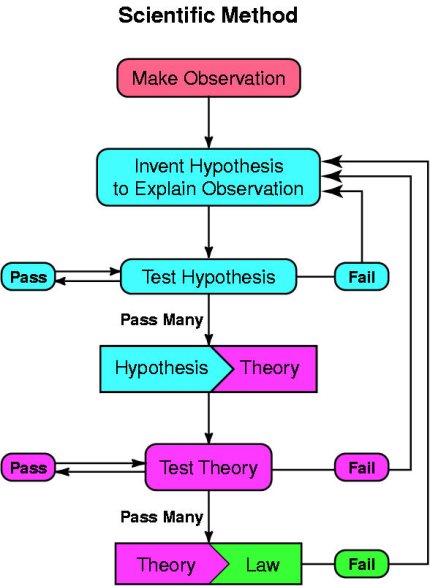


I found the above picture at AntiQuark.

Cathy
Spelling and grammar errors as well as typos are left as an exercise for my readers.


Tuesday, March 24, 2009

You Pay More Taxes, I Really Don't Want To

Jim and I have been fighting for true education reform and against excessive education spending for 7 years. In all of those years, every time a referendum or warrant has failed we asked those who want to pass tax increases on others to voluntarily contribute to the public schools aka government schools. No one has ever voluntarily contributed to the public schools the proposed increased tax burden or funds to make up the lack of taxes caused by failure of a tax increase to pass. I believe these people really do not believe the schools need the extra funds or they would be willing to find the money in their own budget to give to the schools. Often times those that push the increases have direct financial benefit from the passage of said tax increase.

The following LTE recently appeared in the Valley News.

Cathy
Spelling and grammar errors as well as typos are left as an exercise for my readers.


Twenty-five Croydon voters opposed the $67,603 cut in the school budget. Some were deeply concerned how this would affect their children’s education. First the parents are ultimately responsible for the education of their children. Where a school fails it is the parent’s responsibility to fill in the cracks. Second these 25 voters can cut a check to the Croydon School District for $2704.12 each, this amount would replace the funds that were cut. Voluntary contributions on your part will show your true commit to the education of Croydon’s children.

Cathy Peschke
Croydon, NH


Saturday, May 3, 2008

Understandably reluctant

Quote of the Day - "Education is a weapon, whose effect depends on who holds it in his hands and at whom it is aimed." - Joseph Stalin

The following piece appeared in the Eagle Times.


Understandably reluctant
The impact all-day kindergarten will have on students as they move through elementary, middle and then high school is not a certain thing.


Logic would tell us that the more time young children spend in a learning environment the better they will be as they get older. But as everyone knows, other factors affecting a child's ability and desire to learn, such as the home environment, can erase the benefit of early learning.

In Newport, a group of residents are pushing hard for the school board to find $40,000 in next year's budget to pay a third of the $120,000 needed for full-day kindergarten. A Newport businessman has pledged $40,000 and community members are trying to raise another $40,000 in donations. If that effort proves successful, then the school board will have to decide whether it will come up with the final piece.

The money for all-day kindergarten was included in the proposed budget but when that budget failed at the polls, the board had to come up with $186,000 in reductions to meet the default budget figure. The administration recommended, and a split board agreed, to cut the full-day kindergarten money.

But board member Jim Lantz remained committed to seeing the program survive and that led to the present situation.

No doubt the school board would have no qualms with funding this program as well as many others if the money was there. But providing the best educational opportunities throughout the school district is not its only responsibility; it also has to consider the tax impact of every program it includes in the budget. If $40,000 goes toward kindergarten, where will it come from? This problem makes it entirely understandable that board members are reluctant to vote for the program.

In the past, Newport voters have rejected separate warrant articles for all-day kindergarten. That message has not been lost on some board members. The concern that coming up with $40,000 in the new budget will anger voters and come back to haunt the board at next year's budget vote is real. The $80,000 in non-tax dollars will not be there for 2009-10 and the board could get in trouble with voters if it just plugs the $120,000 into the next budget.

So the question is whether there exists a solid majority that favors all-day kindergarten or is it a vocal minority. Perhaps the best approach is for the board to find the $40,000 this year, assuming the public donations are received, then have a separate warrant article in 2009. In this way, the kindness of businessman Ray Malool, who donated $40,000, and the hard work of those raising money in the community does not go unrecognized or unrewarded. But once again, the board needs to hear from all taxpayers about this program and making it again a separate warrant article will give them that answer.


Go to the Eagle Times
to read the great comment by Suzanne.


Saturday, April 26, 2008

Bookbag bullying: Weston PTO turns up the heat

Never do you hear that "teachers are well compensated", "we are spending enough on public education", "teachers have light schedules", "class sizes are small enough". My challenge to readers is to find at least 10 documented sources to the above statements by educrats that benefit from the public education gravy train. My guess is that it can not be done teachers unions would not exist if they told the truth.

Cathy

"If you tell a lie big enough and keep repeating it,
people will eventually come to believe it." Joseph Goebbels

The following piece appeared in the Union Leader.


Bookbag bullying: Weston PTO turns up the heat

Tuesday, Apr. 22, 2008

USING ELEMENTARY school students as couriers to deliver an inflammatory political letter about the city budget is not only against city school policy, but common decency as well.

Last week, Weston Elementary School PTO President Kathleen Epperson wrote a letter (with an all-caps headline and full of underlined phrases) calling Mayor Frank Guinta's budget "completely unacceptable," proclaiming that it would raise class sizes by five students per class, and urging parents to contact their aldermen and oppose the mayor's budget.

Oh, and the letter was unsigned, giving the impression that it was an official document from the school administration.

Although Acting Superintendent Henry Aliberti contacted the mayor to assure him that this was not an official school act, Weston principal Lizabeth MacDonald did approve the letter for distribution to the students -- again, in violation of district policy.

This is all a piece with the district's policy of opposing tooth-and-nail any reduction in school spending by claiming that budget cuts will destroy the schools' ability to teach your children.

Just once, we'd like to see a principal, PTO president or the superintendent put the green eyeshades on and work to find savings instead of scream that the sky is falling every time a mayor proposes trimming the school budget.

We'd like to see someone -- anyone -- in the city school system acknowledge that the public schools are not models of bureaucratic efficiency and that maybe, just maybe, a better way to manage the school budget could be found if only the people in charge looked hard enough.

Alas, all taxpayers and parents hear is incessant squawking by a flock of Chicken Littles running around with their eyes shut and mouths wide open.


Monday, March 10, 2008

Questions to ask yourself before supporting any tax warrant.

Our government and government schools have a spending problem and not a funding problem. We continue to see reduced productivity, deficit spending, debt, guaranteed pensions far exceeding social security, salary increases exceeding the rate of inflation and benefits far exceeding those of us in the private sector that pay these benefits for our government/school employees.

Here are some questions to ask before voting on any education warrants and tax increases.

1. Can I afford an increase in my rent or property taxes?
2. Do I have credit card debt that should be paid off first?
3. Do I have six months salary in my savings account to live off of, if I lose my job?
4. Do I save 10% of my salary each month for my retirement?
5. Am I saving enough money for my children's college education?
6. When I retire my spouse and I will need between $500,000 - 1,000,000 when we retire to live for the next 30 years. Do we have at least 500,000.00 dollars in our retirement account? (This assumes that you are not a state, city, county or school employee with a guaranteed pension that is a percentage of your 3 highest years salary.)
7. Can I continue to afford this warrant if it does pass, because as my assessment increases so will the amount that I pay for the warrant each year?
8. Do I want to put my house at risk for foreclosure?

Here are some questions to ask your school boards, administrators and teachers before voting.

1. How will you balance the budget if the warrant fails?
2. Why is the cost of education going up as much as 10 times faster than the cost of living?
3. Some teachers and administrators are receiving salary increases far exceeding the rate of inflation. How do you expect people in the community to afford the warrant when their salaries went up 3% if they got a raise or 2.1% if they are on social security?
4. 15% of the population does not have health insurance and the rest of the working population pays on average 22% of their own insurance and as much as 100% of their families' premiums. What percentage of their insurance premiums do teachers and administrators pay for themselves and their families?
5. If the warrant does pass do you promise to balance the budget and never come again to the public for another tax warrant?
6. If you plan on coming to us again for a warrant when will that be?
7. Does this plan to spend more money include class size reduction? If so do the teachers plan to take a proportionate pay cut for the reduction in workload?
8. Why do teacher salaries and administrative salaries increase at a rate far above the CPI?
9. Are your unions or associations trying to raise our state taxes as well as our property taxes?
10. If a warrant passes, when will we see our property taxes increased?
11. If asking for a building warrant when do you planning to come to us with an education warrant to staff the new building.


Thursday, June 21, 2007

The Myth: Increased spending correlates to increased performance.

Stanford University researcher Eric Hanushek researched every study (163) that examined the relationship between spending and educational performance. Only 27 or 16% of the studies found increased spending produced increased results. Of this 16% other researchers have found that the increased in performance was so small compared to the increased spending that is does not justify the increased in spending.

Eric A Hanushek, "School Resources and Student Performance," in Does Money Matter? The Effect of School Resources on Student Achievement and Adult Success, Gary Burless, ed., Brookings Institution, 1996.

Richard Rothstein with Karen Hawley Miles, "Where's the Money Gone? Changes in the Level and Composition of Education Spending," Education Policy Institute, 1995.

To learn more we suggest Education Myths What Special-Interest Groups Want YOU to BELIEVE about our SCHOOLS-AND WHY IT ISN'T SO - Jay P. Greene