Faith, Hope, Charity and Duty, our Founding Fathers felt they had a duty to our Nation and to fight for true liberty and equality for all. Our Founders made great sacrifices, it is time for us to make great sacrifices as well.
It is time for Libertarians and Conservatives across the Nation to show they truly believe in less government. We are in the predicament we are in today, in part because for generations Taxpayer Funded Socialist Indoctrination Centers aka public schools aka government schools have not been teaching American History to it's students. They have also done a stellar job indoctrinating generations of students into the socialist mindset, so much so that many see it as a badge of honor to live off of the rest of society.
I strongly believe as a parent that it is my duty to educate my children. It is not my neighbors duty to pay to educate my children. With summer break coming every conservative and libertarian who sends their children to public schools must find a way to either homeschool or send their children to a private school by Fall 2010 or Fall 2011 at the latest.
This means taking a good hard long look at your fiances to support the tuition of a private school or to learn to live on one income so that you will be able to homeschool your children. You will have the whole summer to work on a plan and get your finances to line up to do this as well. If you google living on one income you can find plenty of resources on how to live on one income.
This move would aid the conservative/libertarian agenda on so many fronts it would weaken the teachers' unions, reduce the size of government, improve the educational outcomes for generations to come, improve family structure, save families from paying thousands of dollars in property taxes and with one parent coming home to educate their children it would reduce unemployment.
I realize there are single parents out there but there are single parents who do send their children to private school you will have to learn to sacrifice. Homeschooling families could aid by homeschooling a child of a single parent. All will have to sacrifice for us to undo the damage that was caused by liberals, RINO's and progressives over the last 100 years.
Cathy
Spelling errors, grammar errors, misuse of homonyms and typos are left an exercise for my readers.
Showing posts with label "Adequate Education". Show all posts
Showing posts with label "Adequate Education". Show all posts
Wednesday, May 12, 2010


Tuesday, January 5, 2010
It is Indeed Time to "Undo That Absurd Court Ruling!"
Anyone with half a brain cell knows that educrats, teachers unions and scum suckers living off school tax dollars were the bucks behind the Claremont and Londonderry lawsuits. This morsel of common sense appeared in the December 31, 2009 issue of the Union Leader.
Bob Odell and the Democrats in the legislature pander too much to these groups. Can any of these people think for themselves?

The current tax burden is disgusting, the one they will burden our children with because of their greed is unconscionable.
Cathy Peschke
Spelling and grammar errors as well as typos are left as an exercise for my readers.
School subsidies: The elephant in the room
Thursday, Dec. 31, 2009
As noted in this editorial (click for link), the last decade began with a huge dispute over education funding. Donor towns sued to stop having their money taken and redistributed to other communities' schools. At the start of this decade, donor towns are still with us.
The state spends about $1 billion a year on aid to local public schools. It claims and allocates that money not because the figure is somehow sacrosanct or because school districts wouldn't find ways to thrive without state aid, but because the state Supreme Court removed the Legislature's ability to decide whether to provide such aid and how much that aid should be.
Heading into the next budget, and the next decade, the single most important step the state could take to straighten out its finances would be to undo that absurd court ruling.
To his credit, Gov. John Lynch tried. But his fellow Democrats in Concord could not destroy the goose that might one day soon lay the income tax egg. A judicial requirement to raise education subsidies annually will, over time, create a financial crisis sufficient to convince legislators to find a new source of substantial revenue.
The most recent budget raised school subsidies by $123 million to comply with the court's dictate. The amount Gov. Lynch and legislative Democrats swiped from the Joint Underwriting Association, a private non-profit group, to balance the budget: $110 million.
Removing $1 bllion a year from the Legislature's control via a dictate that education funding must never be cut but funding for social services and law enforcment may makes no sense. Legislators must retake the authority to decide how to spend that money. Failure to do so will lead to a crushing level of taxation never before seen in this state.
Bob Odell and the Democrats in the legislature pander too much to these groups. Can any of these people think for themselves?

The current tax burden is disgusting, the one they will burden our children with because of their greed is unconscionable.
Cathy Peschke
Spelling and grammar errors as well as typos are left as an exercise for my readers.
School subsidies: The elephant in the room
Thursday, Dec. 31, 2009
As noted in this editorial (click for link), the last decade began with a huge dispute over education funding. Donor towns sued to stop having their money taken and redistributed to other communities' schools. At the start of this decade, donor towns are still with us.
The state spends about $1 billion a year on aid to local public schools. It claims and allocates that money not because the figure is somehow sacrosanct or because school districts wouldn't find ways to thrive without state aid, but because the state Supreme Court removed the Legislature's ability to decide whether to provide such aid and how much that aid should be.
Heading into the next budget, and the next decade, the single most important step the state could take to straighten out its finances would be to undo that absurd court ruling.
To his credit, Gov. John Lynch tried. But his fellow Democrats in Concord could not destroy the goose that might one day soon lay the income tax egg. A judicial requirement to raise education subsidies annually will, over time, create a financial crisis sufficient to convince legislators to find a new source of substantial revenue.
The most recent budget raised school subsidies by $123 million to comply with the court's dictate. The amount Gov. Lynch and legislative Democrats swiped from the Joint Underwriting Association, a private non-profit group, to balance the budget: $110 million.
Removing $1 bllion a year from the Legislature's control via a dictate that education funding must never be cut but funding for social services and law enforcment may makes no sense. Legislators must retake the authority to decide how to spend that money. Failure to do so will lead to a crushing level of taxation never before seen in this state.
Tuesday, January 6, 2009
What a Great Idea
We stopped having the Eagle Times delivered right about the time of the first snowfall. We live on a pretty steep hill and our driveway can also be pretty slippery in the winter. I have fallen a number of times getting the mail. In fact the mailbox was difficult even for the mailman to get to so the mailman requested our mailbox be moved into our driveway because the road we live on is steep and the edge of the road changes so dramatically with the weather. But I digress, because it was difficult to get to the newspaper delivery box, I cancelled the Eagle Times for the winter. Initially we received the Argus Champion but sadly that ceased publication. Again I digress.
So for the first time in a long time this morning I went to the Eagle Times and saw the following article. What joy a delicious cup of coffee and officials actually using their brains. Our Founding Fathers would be happy to see this turn of events. I have to admit it was a shocker especially since it came from Claremont home of those dreadful people who sued over an "adequate education." Anyone with a lick of sense knows it was about getting more money for the tax-eaters who refuse to be accountable for actually educating our children.
Cathy
Volunteer tax credit proposed
Would reduce property taxes for some
By BEN BULKELEY, Staff Writer
Monday, January 05, 2009 7:59 PM
CLAREMONT -- Mirroring what some towns in Massachusetts have done to get more volunteers in city departments, State representative John Cloutier, D-Claremont, wants to propose legislation that would allow senior citizens to get a credit for their property tax bills if they volunteer their time in the city.
The bill is currently a Legislative Service Request (LSR), which is a request to draft a bill.
"I submitted this proposed legislation after doing some research on the idea, which was first proposed to me by Mayor Deborah Cutts a year ago," said Cloutier. "Mayor Cutts said she heard of a program in Mass. that gave senior citizens some property tax relief in exchange for community service."
If it becomes law, it would allow seniors over the age of 60 to receive a credit up to $750 if they volunteered for one of the city departments.
"I requested that the legislature's research division check out the program, and they confirmed that there was such a program in Mass.," said Cloutier. "Over the past year I became more interested in this program, and believed it was worth serious consideration in New Hampshire."
Mayor Cutts said that by using the tax credit in exchange for volunteers, Claremont would ultimately benefit.
"This is a win-win opportunity. I believe we have a segment of our population that frequently volunteers-- typically parents or folks very dedicated to culture or arts," said Cutts. "Volunteering for these groups comes easy-- it's part of our daily life and culture and it satisfies some of our needs."
Cloutier said that the towns that wished to participate in the program would be able to decide how it would be implemented.
"If the program were to become law it would be up to local communities to decide whether to participate," Cloutier said. "The city council would have to vote to participate in the case of Claremont, and town meetings would vote on whether communities like Unity and Lempster would participate, in my district's case."
Cutts said that the program could target members of the community who wouldn't normally volunteer.
"I also believe we have a segment of our population that isn't as involved in community activities as they could be," said Cutts, referring to senior citizens. "Reasons include lack of transportation, limited belief that they could really make a difference, belief they are of the old school and that nobody really wants them, fear, lack of incentive.
"I hear this when I visit and talk with folks around town and I hear it when I talk with younger folks about their parents, aunts and uncles," said Cutts. "The biggest sore point in Claremont is property taxes-- if we can offer an opportunity to reduce your taxes and help share your value in your community-- what a great mix."
Cloutier said that the program could be used in a different number of ways.
"Ideally I envision the local communities having broad leeway within certain established limits (such as the legislation's proposed maximum amount of tax relief of $750 for citizens over age 60) on which municipal departments would use volunteers, for which jobs, and for what amount of time," said Cloutier.
"As a Claremont citizen I think we might be able to use volunteers in such areas as transfer station and recycling center, Fiske Library, Goodwin Community Center, and the Visitors Center, among other examples," he said.
The visitor center was one of the locations Cutts described as having a need for volunteers.
"I'm not positive at this point but one opportunity that came to mind was our visitor center," said Cutts. "We would love to staff the visitor center but staffing won't allow that right now. I think there are Claremont senior citizens that would love an opportunity to volunteer staffing our visitor center simply because it would be fun. If they could get a tax break, even better."
No time or date has been scheduled for the LSR, Cloutier said.
Cutts added that the program could have other benefits.
"I do believe that many of our senior citizens would become more involved and share their help and expertise because that is one of the ways we teach them to stay healthy," said Cutts, adding that the incentive of a tax credit would entice more people to participate.
"We are really trying to get enabling legislation versus implementing this right away in Claremont," said Cutts. "We are trying to make the opportunity available. As I always say... build it and they will come."
Ben Bulkeley can be reached at (603) 543-3100 ext. 105, or by e-mail at bbulkeley@eagletimes.com
Thought of the day - Liberal Fascism at its best. NBC cuts Coulter; Keeps Perez. Gee I thought this was America.
So for the first time in a long time this morning I went to the Eagle Times and saw the following article. What joy a delicious cup of coffee and officials actually using their brains. Our Founding Fathers would be happy to see this turn of events. I have to admit it was a shocker especially since it came from Claremont home of those dreadful people who sued over an "adequate education." Anyone with a lick of sense knows it was about getting more money for the tax-eaters who refuse to be accountable for actually educating our children.
Cathy
Volunteer tax credit proposed
Would reduce property taxes for some
By BEN BULKELEY, Staff Writer
Monday, January 05, 2009 7:59 PM
CLAREMONT -- Mirroring what some towns in Massachusetts have done to get more volunteers in city departments, State representative John Cloutier, D-Claremont, wants to propose legislation that would allow senior citizens to get a credit for their property tax bills if they volunteer their time in the city.
The bill is currently a Legislative Service Request (LSR), which is a request to draft a bill.
"I submitted this proposed legislation after doing some research on the idea, which was first proposed to me by Mayor Deborah Cutts a year ago," said Cloutier. "Mayor Cutts said she heard of a program in Mass. that gave senior citizens some property tax relief in exchange for community service."
If it becomes law, it would allow seniors over the age of 60 to receive a credit up to $750 if they volunteered for one of the city departments.
"I requested that the legislature's research division check out the program, and they confirmed that there was such a program in Mass.," said Cloutier. "Over the past year I became more interested in this program, and believed it was worth serious consideration in New Hampshire."
Mayor Cutts said that by using the tax credit in exchange for volunteers, Claremont would ultimately benefit.
"This is a win-win opportunity. I believe we have a segment of our population that frequently volunteers-- typically parents or folks very dedicated to culture or arts," said Cutts. "Volunteering for these groups comes easy-- it's part of our daily life and culture and it satisfies some of our needs."
Cloutier said that the towns that wished to participate in the program would be able to decide how it would be implemented.
"If the program were to become law it would be up to local communities to decide whether to participate," Cloutier said. "The city council would have to vote to participate in the case of Claremont, and town meetings would vote on whether communities like Unity and Lempster would participate, in my district's case."
Cutts said that the program could target members of the community who wouldn't normally volunteer.
"I also believe we have a segment of our population that isn't as involved in community activities as they could be," said Cutts, referring to senior citizens. "Reasons include lack of transportation, limited belief that they could really make a difference, belief they are of the old school and that nobody really wants them, fear, lack of incentive.
"I hear this when I visit and talk with folks around town and I hear it when I talk with younger folks about their parents, aunts and uncles," said Cutts. "The biggest sore point in Claremont is property taxes-- if we can offer an opportunity to reduce your taxes and help share your value in your community-- what a great mix."
Cloutier said that the program could be used in a different number of ways.
"Ideally I envision the local communities having broad leeway within certain established limits (such as the legislation's proposed maximum amount of tax relief of $750 for citizens over age 60) on which municipal departments would use volunteers, for which jobs, and for what amount of time," said Cloutier.
"As a Claremont citizen I think we might be able to use volunteers in such areas as transfer station and recycling center, Fiske Library, Goodwin Community Center, and the Visitors Center, among other examples," he said.
The visitor center was one of the locations Cutts described as having a need for volunteers.
"I'm not positive at this point but one opportunity that came to mind was our visitor center," said Cutts. "We would love to staff the visitor center but staffing won't allow that right now. I think there are Claremont senior citizens that would love an opportunity to volunteer staffing our visitor center simply because it would be fun. If they could get a tax break, even better."
No time or date has been scheduled for the LSR, Cloutier said.
Cutts added that the program could have other benefits.
"I do believe that many of our senior citizens would become more involved and share their help and expertise because that is one of the ways we teach them to stay healthy," said Cutts, adding that the incentive of a tax credit would entice more people to participate.
"We are really trying to get enabling legislation versus implementing this right away in Claremont," said Cutts. "We are trying to make the opportunity available. As I always say... build it and they will come."
Ben Bulkeley can be reached at (603) 543-3100 ext. 105, or by e-mail at bbulkeley@eagletimes.com
Thought of the day - Liberal Fascism at its best. NBC cuts Coulter; Keeps Perez. Gee I thought this was America.
Friday, May 30, 2008
Granholm's Tax Warning - A Tax Warning for New Hampshire
During the last couple of years I have been working on my families genealogy. I became interested in genealogy because as a child my mother told me I was related to the Presidents John Adams and John Quincy Adams.
It appears that tax fighting is genetically encoded in me as Sam Adams and I our distant cousins, we share a great grandmother. My extended family has been in New Hamsphire and Massachusetts for well over 400 years.
Cathy
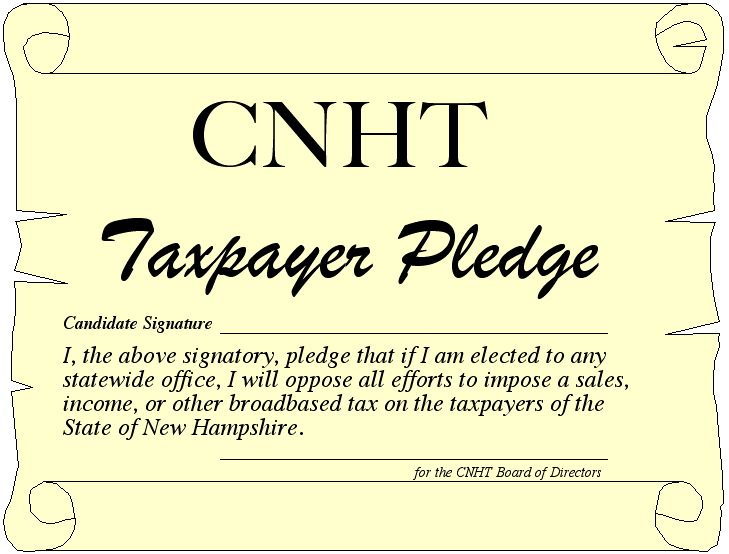
With the current trend by tax-eaters to get legislators to reject the tax pledge people should be aware of what will happen if a broad based tax or income tax is passed. An income tax will not reduce your overall tax liability but will insure a larger group of tax-eaters through increased state, county and school employees. These groups will continue to spend at rates greater than the rate of inflation and will request even more tax increases in the future. The larger these groups become the more lobbying power they will have to push through more taxes.
Hat tip to our friend Pete the finance guy for the following piece which appeared in the Wall Street Journal.
Granholm's Tax Warning
May 28, 2008
It's no fun to kick a state when it's down - especially when the local politicians are doing a fine job of it - but the latest news of Michigan's deepening budget woe is a national warning of what happens when you raise taxes in a weak economy.
Officials in Lansing reported this month that the state faces a revenue shortfall between $350 million and $550 million next budget year. This is a major embarrassment for Governor Jennifer Granholm, the second-term Democrat who shut down the state government last year until the Legislature approved Michigan's biggest tax hike in a generation. Her tax plan raised the state income tax rate to 4.35% from 3.9%, and increased the state's tax on gross business receipts by 22%. Ms. Granholm argued that these new taxes would raise some $1.3 billion in new revenue that could be "invested" in social spending and new businesses and lead to a Michigan renaissance.
Not quite. Six months later one-third of the expected revenues have vanished as the state's economy continues to struggle. Income tax collections are falling behind estimates, as are property tax receipts and those from the state's transaction tax on home sales.
Michigan is now in the 18th month of a state-wide recession, and the unemployment rate of 6.9% remains far above the national rate of 5%. Ms. Granholm blames the nationwide mortgage meltdown and higher energy prices for the job losses and disappearing revenues, but this Great Lakes state is in its own unique hole. Nearby Illinois (5.4% jobless rate) and even Ohio (5.6%) are doing better.
Leon Drolet, the head of the Michigan Taxpayers Alliance, complains that "we are witnessing the Detroit-ification of Michigan." By that he means that the same high tax and spend policies that have hollowed out the Motor City are now infecting many other areas of the state.
The tax hikes have done nothing but accelerate the departures of families and businesses. Michigan ranks fourth of the 50 states in declining home values, and these days about two families leave for every family that moves in. Making matters worse is that property taxes are continuing to rise by the rate of overall inflation, while home values fall. Michigan natives grumble that the only reason more people aren't blazing a path out of the state is they can't sell their homes. Research by former Comerica economist David Littmann finds that about the only industry still growing in Michigan is government. Ms. Granholm's $44.8 billion budget this year further fattened agency payrolls.
There's another national lesson from the Granholm tax dud. If Democrats believe that anger over the economy and high gas prices have put voters in a receptive mood for higher taxes, they should visit the Wolverine State.
Just a few weeks ago taxpayer advocates collected enough signatures in suburban Detroit for a ballot initiative to recall powerful Speaker of the House Andy Dillon, who was one of last year's tax-hike ringleaders. Voters seem to think there would be rough justice if for once politicians, rather than workers, lose their jobs from higher taxes.
If I paid my taxes as carelessly and dishonestly as the politicians spend them, I would have been in jail long since. – Richard Needham
It appears that tax fighting is genetically encoded in me as Sam Adams and I our distant cousins, we share a great grandmother. My extended family has been in New Hamsphire and Massachusetts for well over 400 years.
Cathy
With the current trend by tax-eaters to get legislators to reject the tax pledge people should be aware of what will happen if a broad based tax or income tax is passed. An income tax will not reduce your overall tax liability but will insure a larger group of tax-eaters through increased state, county and school employees. These groups will continue to spend at rates greater than the rate of inflation and will request even more tax increases in the future. The larger these groups become the more lobbying power they will have to push through more taxes.
Hat tip to our friend Pete the finance guy for the following piece which appeared in the Wall Street Journal.
Granholm's Tax Warning
May 28, 2008
It's no fun to kick a state when it's down - especially when the local politicians are doing a fine job of it - but the latest news of Michigan's deepening budget woe is a national warning of what happens when you raise taxes in a weak economy.
Officials in Lansing reported this month that the state faces a revenue shortfall between $350 million and $550 million next budget year. This is a major embarrassment for Governor Jennifer Granholm, the second-term Democrat who shut down the state government last year until the Legislature approved Michigan's biggest tax hike in a generation. Her tax plan raised the state income tax rate to 4.35% from 3.9%, and increased the state's tax on gross business receipts by 22%. Ms. Granholm argued that these new taxes would raise some $1.3 billion in new revenue that could be "invested" in social spending and new businesses and lead to a Michigan renaissance.
Not quite. Six months later one-third of the expected revenues have vanished as the state's economy continues to struggle. Income tax collections are falling behind estimates, as are property tax receipts and those from the state's transaction tax on home sales.
Michigan is now in the 18th month of a state-wide recession, and the unemployment rate of 6.9% remains far above the national rate of 5%. Ms. Granholm blames the nationwide mortgage meltdown and higher energy prices for the job losses and disappearing revenues, but this Great Lakes state is in its own unique hole. Nearby Illinois (5.4% jobless rate) and even Ohio (5.6%) are doing better.
Leon Drolet, the head of the Michigan Taxpayers Alliance, complains that "we are witnessing the Detroit-ification of Michigan." By that he means that the same high tax and spend policies that have hollowed out the Motor City are now infecting many other areas of the state.
The tax hikes have done nothing but accelerate the departures of families and businesses. Michigan ranks fourth of the 50 states in declining home values, and these days about two families leave for every family that moves in. Making matters worse is that property taxes are continuing to rise by the rate of overall inflation, while home values fall. Michigan natives grumble that the only reason more people aren't blazing a path out of the state is they can't sell their homes. Research by former Comerica economist David Littmann finds that about the only industry still growing in Michigan is government. Ms. Granholm's $44.8 billion budget this year further fattened agency payrolls.
There's another national lesson from the Granholm tax dud. If Democrats believe that anger over the economy and high gas prices have put voters in a receptive mood for higher taxes, they should visit the Wolverine State.
Just a few weeks ago taxpayer advocates collected enough signatures in suburban Detroit for a ballot initiative to recall powerful Speaker of the House Andy Dillon, who was one of last year's tax-hike ringleaders. Voters seem to think there would be rough justice if for once politicians, rather than workers, lose their jobs from higher taxes.
If I paid my taxes as carelessly and dishonestly as the politicians spend them, I would have been in jail long since. – Richard Needham
Monday, May 19, 2008
Now what? Pursuing a new amendment
The editorial below poses the question, "Now what?" regarding education funding. First we have a spending problem and not a funding problem. The Union Leader hits the nail on the head it is about an income tax. For those readers who believe an income tax will solve the problem I have a bridge to sell you. By no means will an income tax permanently solve the property tax burden. Because our school systems will continue to spend at a rate above inflation so an income tax will not cover their spending so your school districts will come begging for more money because "its for the kids." Check it out yourselves it happens everywhere. Second those pushing an income tax will have a direct financial gain from a passage of said tax. It is much easier to lobby the legislators for more money because they are spending other people's money not their own. Educrats know this that is why they do not want local control. They are hoping local taxpayers are foolish enough to fall for the income tax scheme. A tax is a tax which pocket it comes from will effect the control you have over how it is spent.
Cathy
We don't need an amendment. We need a Legislature with enough backbone to stand up to the court and defy their unconstitutional mandate.
The amendments proposed so far are dangerous and do nothing to prevent more frivolous lawsuits.
Strike the "cherish" clause if you think an amendment is necessary. All these other amendment plans simply strengthen Claremont by writing into the Constitution a responsibility which doesn't presently exist.
- Jim Peschke
Now what? Pursuing a new amendment
Sunday, May. 18, 2008
WHAT WAS billed as the state's best chance at getting a constitutional amendment on education funding failed miserably last week. The compromise amendment worked out by Democrat and Republican leaders could not even draw the support of a simple majority in the House, never mind the 60 percent it needed to pass. So the question is: Now what?
Opponents of an amendment are thrilled. Their quest to shift all responsibility for public school funding to the state has passed another hurdle. Their talking points don't even need to be rewritten. Just updated: "Legislators have yet again rejected the idea that the state can and should shirk its duty to provide our children with an adequate education."
However, supporters of reasonably splitting public education's costs between localities and the state need not lose hope. There is broad support among the left and the right for letting the state target aid to school districts that need it most. An amendment that most legislators would back can be written. The challenge is not so much wording an amendment as it is electing the right legislators.
Until the Claremont rulings, the State of New Hampshire had never fully funded public education. It was understood that local communities were responsible for their own schools, and the state would chip in with additional dollars. There are plenty of people in New Hampshire who believe strongly -- and correctly -- that this is the best arrangement, not only for our children, but for the taxpayers. We need to elect them to the Legislature.
Mandating that the state pay for 100 percent of basic public education costs has nothing to do with "fairness." It isn't fair to collect money from property-poor communities and send it to property-rich ones. That is what the Claremont mandate does.
It also has nothing to do with the "right" to an adequate education. Were that the case, legislators would be busy trying to figure out why some students in middle-income communities perform so much better than those in communities that spend more money on education.
Instead, they focus on money. That's because this debate is and has always been all about taxes. Amendment opponents want a broadbased state tax. They know that their only chance of getting one is to tie it to school funding. It's a tested scheme. If you want a tax increase, make sure it is "for the children."
This tax increase will not make our schools better or our children smarter. If money were the answer, the District of Columbia would have the best schools in the country instead of the worst.
Granite Staters can stop this tax-hike scheme only by electing more legislators who believe that the state has a duty to supplement local school budgets, not to entirely relieve local communities of the responsibility for funding their own schools.
To do that, we'll have to throw out many of the current lot this fall. Be sure to ask your representatives and senator whether they support an amendment to restore the state's proper role in education funding. If they don't, you should be looking for new representation.
Cathy
We don't need an amendment. We need a Legislature with enough backbone to stand up to the court and defy their unconstitutional mandate.
The amendments proposed so far are dangerous and do nothing to prevent more frivolous lawsuits.
Strike the "cherish" clause if you think an amendment is necessary. All these other amendment plans simply strengthen Claremont by writing into the Constitution a responsibility which doesn't presently exist.
- Jim Peschke
Now what? Pursuing a new amendment
Sunday, May. 18, 2008
WHAT WAS billed as the state's best chance at getting a constitutional amendment on education funding failed miserably last week. The compromise amendment worked out by Democrat and Republican leaders could not even draw the support of a simple majority in the House, never mind the 60 percent it needed to pass. So the question is: Now what?
Opponents of an amendment are thrilled. Their quest to shift all responsibility for public school funding to the state has passed another hurdle. Their talking points don't even need to be rewritten. Just updated: "Legislators have yet again rejected the idea that the state can and should shirk its duty to provide our children with an adequate education."
However, supporters of reasonably splitting public education's costs between localities and the state need not lose hope. There is broad support among the left and the right for letting the state target aid to school districts that need it most. An amendment that most legislators would back can be written. The challenge is not so much wording an amendment as it is electing the right legislators.
Until the Claremont rulings, the State of New Hampshire had never fully funded public education. It was understood that local communities were responsible for their own schools, and the state would chip in with additional dollars. There are plenty of people in New Hampshire who believe strongly -- and correctly -- that this is the best arrangement, not only for our children, but for the taxpayers. We need to elect them to the Legislature.
Mandating that the state pay for 100 percent of basic public education costs has nothing to do with "fairness." It isn't fair to collect money from property-poor communities and send it to property-rich ones. That is what the Claremont mandate does.
It also has nothing to do with the "right" to an adequate education. Were that the case, legislators would be busy trying to figure out why some students in middle-income communities perform so much better than those in communities that spend more money on education.
Instead, they focus on money. That's because this debate is and has always been all about taxes. Amendment opponents want a broadbased state tax. They know that their only chance of getting one is to tie it to school funding. It's a tested scheme. If you want a tax increase, make sure it is "for the children."
This tax increase will not make our schools better or our children smarter. If money were the answer, the District of Columbia would have the best schools in the country instead of the worst.
Granite Staters can stop this tax-hike scheme only by electing more legislators who believe that the state has a duty to supplement local school budgets, not to entirely relieve local communities of the responsibility for funding their own schools.
To do that, we'll have to throw out many of the current lot this fall. Be sure to ask your representatives and senator whether they support an amendment to restore the state's proper role in education funding. If they don't, you should be looking for new representation.
Thursday, May 15, 2008
WNTK posed the question...How do you solve the school funding problem?
WNTK posed the question...How do you solve the school funding problem?
First there is not a funding problem there is a spending problem. Cut back spending and the "funding problem" will disappear.
Any individual can obtain information about their school's finances for the past several years. Analysis of said finances would show that schools are spending faster than the rate of inflation with some school districts exceeding inflation by as much as 50 - 100%. Limit spending to the rate of inflation.
An analysis of student to teacher ratios will show that ratios continue to decrease with no improvement in student performance. The decreased student to teacher ratios inflates the cost of education.
I am 44 I am sure many of my older readers remember a time when we did not have teacher aids. If there was any help in the classroom there was a room mother and they were not in classroom that often. The switch to teacher aids also inflated the cost of educating our children, as well as having another group of tax eaters demanding more of our tax dollars.
We need to get rid of the state department of education. It is just a bunch of bureaucrats wasting are tax dollars, furthermore they are just another lobbying group for educrats and education tax dollars. They have no direct educational influence on our children. Getting rid of the state department of education would send a ton of money back into the classroom or back into taxpayers’ pockets. I would like to see an analysis of student performance results, dropout rates and literacy rates before and after the state department of education existed.
We need to get rid of tenure. The only people it benefits are poor and mediocre teachers and the families that benefit from that paycheck.
We need to get rid of the teachers' pension plan. It is a Ponzi Scheme that has no benefit to New Hampshire's public school students. Our legislators need to switch from a defined benefit plan to a defined contribution plan. Today our pension system is 1.6 billion under funded. It is constitutionally protected with the taxpayers going to have to eventually foot the bill.
Increase the age of retirement.
We need to get rid of the SAU's this is yet another group of bureaucrats eating our tax dollars with no direct influence of the education or educational performance of our children.
These are just a few steps that could solve the school-spending problem but it will never happen. Because of greed on the part of those that believe "It's for the kids." If education were truly "for the kids" the funds would follow the child and not the institution. When will our legislators stop pandering to educrats and start really caring about the education of New Hampshire's children.
Public schools are nothing more than government schools and like many forms of government there is waste, patronage and corruption.
First there is not a funding problem there is a spending problem. Cut back spending and the "funding problem" will disappear.
Any individual can obtain information about their school's finances for the past several years. Analysis of said finances would show that schools are spending faster than the rate of inflation with some school districts exceeding inflation by as much as 50 - 100%. Limit spending to the rate of inflation.
An analysis of student to teacher ratios will show that ratios continue to decrease with no improvement in student performance. The decreased student to teacher ratios inflates the cost of education.
I am 44 I am sure many of my older readers remember a time when we did not have teacher aids. If there was any help in the classroom there was a room mother and they were not in classroom that often. The switch to teacher aids also inflated the cost of educating our children, as well as having another group of tax eaters demanding more of our tax dollars.
We need to get rid of the state department of education. It is just a bunch of bureaucrats wasting are tax dollars, furthermore they are just another lobbying group for educrats and education tax dollars. They have no direct educational influence on our children. Getting rid of the state department of education would send a ton of money back into the classroom or back into taxpayers’ pockets. I would like to see an analysis of student performance results, dropout rates and literacy rates before and after the state department of education existed.
We need to get rid of tenure. The only people it benefits are poor and mediocre teachers and the families that benefit from that paycheck.
We need to get rid of the teachers' pension plan. It is a Ponzi Scheme that has no benefit to New Hampshire's public school students. Our legislators need to switch from a defined benefit plan to a defined contribution plan. Today our pension system is 1.6 billion under funded. It is constitutionally protected with the taxpayers going to have to eventually foot the bill.
Increase the age of retirement.
We need to get rid of the SAU's this is yet another group of bureaucrats eating our tax dollars with no direct influence of the education or educational performance of our children.
These are just a few steps that could solve the school-spending problem but it will never happen. Because of greed on the part of those that believe "It's for the kids." If education were truly "for the kids" the funds would follow the child and not the institution. When will our legislators stop pandering to educrats and start really caring about the education of New Hampshire's children.
Public schools are nothing more than government schools and like many forms of government there is waste, patronage and corruption.
Thursday, April 10, 2008
Funding farce: Our dumb school aid plan
The following piece appears in the Union Leader.
Funding farce: Our dumb school aid plan
TO SEE WHAT is wrong with the Supreme Court's Claremont and Londonderry rulings dictating state education funding policy, look no further than the new school funding formula approved by the House Education Committee on Tuesday.
The committee added $3 million to the bill, raising its price tag to $917 million, because the underlying formula was so fundamentally unfair that extra money was needed to buy the support of some communities. The Senate had already added extra money for the same reason a few weeks before.
The fundamental unfairness stems from the bill's allocation of $3,450 per pupil to every school district in the state regardless of need. Bedford and Amherst get that base amount of state aid, as do Berlin and Claremont. Only after distributing that cash statewide can the state give aid to districts that might really need it.
Why would anyone spend scarce tax dollars this way? The only reason is because the state Supreme Court has said we must.
Hence the creation of a formula that takes money from poorer communities and gives it to wealthier ones -- then makes up for it with amendments that take money from some wealthier towns and give it to some poorer ones.
Absent the Supreme Court's dictate that the state provide funding for an "adequate" education to every district, school aid would be distributed according to actual need. Legislators are trying to fit the square peg of rational school funding into the round hole provided by the Supreme Court. No matter how hard they try, it is not going to fit.
That is why the state needs a constitutional amendment to restore the Legislature's rightful authority to decide for itself how best to distribute education aid. Barring such an amendment, legislators will have to continue doling out millions in education aid in ways that don't make sense and don't help our children.
Funding farce: Our dumb school aid plan
TO SEE WHAT is wrong with the Supreme Court's Claremont and Londonderry rulings dictating state education funding policy, look no further than the new school funding formula approved by the House Education Committee on Tuesday.
The committee added $3 million to the bill, raising its price tag to $917 million, because the underlying formula was so fundamentally unfair that extra money was needed to buy the support of some communities. The Senate had already added extra money for the same reason a few weeks before.
The fundamental unfairness stems from the bill's allocation of $3,450 per pupil to every school district in the state regardless of need. Bedford and Amherst get that base amount of state aid, as do Berlin and Claremont. Only after distributing that cash statewide can the state give aid to districts that might really need it.
Why would anyone spend scarce tax dollars this way? The only reason is because the state Supreme Court has said we must.
Hence the creation of a formula that takes money from poorer communities and gives it to wealthier ones -- then makes up for it with amendments that take money from some wealthier towns and give it to some poorer ones.
Absent the Supreme Court's dictate that the state provide funding for an "adequate" education to every district, school aid would be distributed according to actual need. Legislators are trying to fit the square peg of rational school funding into the round hole provided by the Supreme Court. No matter how hard they try, it is not going to fit.
That is why the state needs a constitutional amendment to restore the Legislature's rightful authority to decide for itself how best to distribute education aid. Barring such an amendment, legislators will have to continue doling out millions in education aid in ways that don't make sense and don't help our children.
Tuesday, January 29, 2008
K-12 SPENDING AND ACHIEVEMENT IN KANSAS
New Hampshire is currently looking to define education. This need was bought on by a few lawsuits funded primarily by those who would benefit from increased educational spending. The increased in spending that is a result of these lawsuits is primarily an increase in salaries and an increase in bureaucratic positions. Increased spending for education as a result of these lawsuits never results in increased achievement by students. It will result in an increase in the amount of taxdollars coming out of your pockets.
K-12 SPENDING AND ACHIEVEMENT IN KANSAS
Discussions about education in Kansas typically involve two assertions. The first is that schools are performing well. The second is that Kansas taxpayers are excessively frugal. John R. LaPlante, in his new research paper, "K-12 Spending and Achievement in Kansas: 2007 Edition," challenges both assumptions by laying out some basic facts about the history of school spending and achievement for Kansas schools.
According to LaPlante, since 1993, changes in student enrollment have been modest:
In the 2006-07 school year, Kansas government-run public schools had a full-time equivalent (FTE) enrollment that was just 1.8 higher than the same number in 1993.
The infusion of an additional $2.5 billion to the yearly budget has meant that per-pupil funding has increased from $5,987 to $11,558, or 93 percent.
While Kansas schools have achieved modest gains, their performance on mathematics in the fourth grade, progress has stalled, he says. Currently, half of all students are not proficient on math. If possible, performance on reading has been worse.
In the 1997-98 school year, per-pupil spending was $6,828; two out of three students were not proficient in reading.
During the 2006-07 school year, per-pupil spending was 69 percent higher, at $11,558; two out of three students were not proficient in reading.
Local school districts have had a privileged position as recipients of tax dollars spent on education. This is in contrast with both pre-school and higher education, in which families have a much larger say in where their children use those dollars. It is time to give those families a larger say in K-12 education by promoting truly independent charter schools and letting the funds follow the child to any school, private or public, says LaPlante.
Source: John R. LaPlante, "K-12 Spending and Achievement in Kansas: 2007 Edition," Flint Hills Center, Vol. 4, Issue 10, December 31, 2007.
K-12 SPENDING AND ACHIEVEMENT IN KANSAS
Discussions about education in Kansas typically involve two assertions. The first is that schools are performing well. The second is that Kansas taxpayers are excessively frugal. John R. LaPlante, in his new research paper, "K-12 Spending and Achievement in Kansas: 2007 Edition," challenges both assumptions by laying out some basic facts about the history of school spending and achievement for Kansas schools.
According to LaPlante, since 1993, changes in student enrollment have been modest:
In the 2006-07 school year, Kansas government-run public schools had a full-time equivalent (FTE) enrollment that was just 1.8 higher than the same number in 1993.
The infusion of an additional $2.5 billion to the yearly budget has meant that per-pupil funding has increased from $5,987 to $11,558, or 93 percent.
While Kansas schools have achieved modest gains, their performance on mathematics in the fourth grade, progress has stalled, he says. Currently, half of all students are not proficient on math. If possible, performance on reading has been worse.
In the 1997-98 school year, per-pupil spending was $6,828; two out of three students were not proficient in reading.
During the 2006-07 school year, per-pupil spending was 69 percent higher, at $11,558; two out of three students were not proficient in reading.
Local school districts have had a privileged position as recipients of tax dollars spent on education. This is in contrast with both pre-school and higher education, in which families have a much larger say in where their children use those dollars. It is time to give those families a larger say in K-12 education by promoting truly independent charter schools and letting the funds follow the child to any school, private or public, says LaPlante.
Source: John R. LaPlante, "K-12 Spending and Achievement in Kansas: 2007 Edition," Flint Hills Center, Vol. 4, Issue 10, December 31, 2007.
Wednesday, September 12, 2007
CHECK THE FACTS: Selling adequacy, making millions
I finally got the chance to go to my first Croydon school board meeting. It was a real eye opener and I hope to attend more meetings on a regular basis from here on out.
A woman in the audience pointed out that her taxes went up from 300 dollars to when she first moved to Croydon to 3000 dollars the amount she is currently paying. Education spending in Croydon has out paced the rate of inflation without correlating improvement in student performance. Our goal over the next few months is to do some investigative reporting and report on said information here.
Along those lines we want to share with our readers a must read article regarding lawsuits bought on by organizations of which teachers belong. The following snippet appeared in the Hoover Institution's Education Next A Journal of Opinion and Research. The Sunapee School District is departing from SAU 43 this could mean bigger taxes for Croydon residents. In reality what should happen is the SAU should cut spending in proportion to the revenues lost by the departure of the Sunapee School District. On top of that we are facing income taxes as a result of adequacy lawsuits bought on by individuals that are to educate our children. It is really important for taxpayers and parents to become involved and try to reduce spending. If spending increases school employees will only have more power to continue to increase spending at rates far exceeding the rate of inflation meaning continually higher taxes in the future.
What Are States Paying For?
Cost estimates are an important component in the politics of court and legislative deliberations on schools. The adequacy debates are typically motivated by obvious and real shortfalls in the achievement of a state’s students, but a combination of naive concerned citizens and self-interested parties invariably pushes to translate these debates into a simple dollar figure. Such translation is salient for courts and legislatures and both simplifies and focuses the issue for the media.
What Picus and Odden provide in their reports is essentially a selective review of the published literature on program effects. Why do different states and organizations pay ever-increasing amounts to see this research review when Google would bring up the most recent version immediately and without expense? The answer is simple. Clients want a bottom-line statement about how much spending would provide an adequate education, and they want this cost estimate attached to their specific state. Few people care about the “studies” on which consultants base their reports, or even their validity, because nobody really expects schools to implement these specific programs if given extra funding. Clients simply want a requisite amount of scientific aura around the number that will become the rallying flag for political and legal actions.
Summing the added cost of the separate programs suggested by Picus and Odden, I estimate that the overall plan, if fully applied, would increase average spending in Washington by $1,760 to $2,760 per student, or 23 to 35 percent. This estimate of the increased spending necessary to achieve “adequacy” is very similar to the percentage increases they have recommended to other states, and numbers like these will presumably become part of the headlines surrounding the new court case.
But pity the poor states that actually implement the Picus and Odden plan. They are sure to be disappointed by the results, and most taxpayers (those who do not work for the schools) will be noticeably poorer.
Eric A. Hanushek is a senior fellow at the Hoover Institution, Stanford University, and a member of its Koret Task Force on K–12 Education.
To read the full article go to Hoover Institution's Education Next website.
A woman in the audience pointed out that her taxes went up from 300 dollars to when she first moved to Croydon to 3000 dollars the amount she is currently paying. Education spending in Croydon has out paced the rate of inflation without correlating improvement in student performance. Our goal over the next few months is to do some investigative reporting and report on said information here.
Along those lines we want to share with our readers a must read article regarding lawsuits bought on by organizations of which teachers belong. The following snippet appeared in the Hoover Institution's Education Next A Journal of Opinion and Research. The Sunapee School District is departing from SAU 43 this could mean bigger taxes for Croydon residents. In reality what should happen is the SAU should cut spending in proportion to the revenues lost by the departure of the Sunapee School District. On top of that we are facing income taxes as a result of adequacy lawsuits bought on by individuals that are to educate our children. It is really important for taxpayers and parents to become involved and try to reduce spending. If spending increases school employees will only have more power to continue to increase spending at rates far exceeding the rate of inflation meaning continually higher taxes in the future.
What Are States Paying For?
Cost estimates are an important component in the politics of court and legislative deliberations on schools. The adequacy debates are typically motivated by obvious and real shortfalls in the achievement of a state’s students, but a combination of naive concerned citizens and self-interested parties invariably pushes to translate these debates into a simple dollar figure. Such translation is salient for courts and legislatures and both simplifies and focuses the issue for the media.
What Picus and Odden provide in their reports is essentially a selective review of the published literature on program effects. Why do different states and organizations pay ever-increasing amounts to see this research review when Google would bring up the most recent version immediately and without expense? The answer is simple. Clients want a bottom-line statement about how much spending would provide an adequate education, and they want this cost estimate attached to their specific state. Few people care about the “studies” on which consultants base their reports, or even their validity, because nobody really expects schools to implement these specific programs if given extra funding. Clients simply want a requisite amount of scientific aura around the number that will become the rallying flag for political and legal actions.
Summing the added cost of the separate programs suggested by Picus and Odden, I estimate that the overall plan, if fully applied, would increase average spending in Washington by $1,760 to $2,760 per student, or 23 to 35 percent. This estimate of the increased spending necessary to achieve “adequacy” is very similar to the percentage increases they have recommended to other states, and numbers like these will presumably become part of the headlines surrounding the new court case.
But pity the poor states that actually implement the Picus and Odden plan. They are sure to be disappointed by the results, and most taxpayers (those who do not work for the schools) will be noticeably poorer.
Eric A. Hanushek is a senior fellow at the Hoover Institution, Stanford University, and a member of its Koret Task Force on K–12 Education.
To read the full article go to Hoover Institution's Education Next website.
Friday, September 7, 2007
Suing school districts unhappy with state's position
The article at the bottom of this post appeared in the Union Leader.
The only ones who are going to benefit from this court case our the employees of the school districts and any businesses doing business with the schools. This lawsuit is about one thing and one thing only, taking as much money out of our pockets and putting it into school employees pockets. Adequacy lawsuits never result in increased student performance. This is about greed not need. Our schools have a spending problem not a funding problem.
If only our congressmen and judges did a little research before handing done this insane decision students and taxpayers would have a brighter future.
CHECK THE FACTS:
The Confidence Men
By Eric Hanushek
Selling adequacy, making millions
Suing school districts unhappy with state's position
By NORMA LOVE
The Associated Press
Friday, Sep. 7, 2007
CONCORD – A coalition of towns suing New Hampshire over school funding wants the state Supreme Court to make lawmakers determine its cost and come up with a way to pay for it by June 30.
The coalition -- led by Londonderry -- is reacting to the state's request last month that the court dismiss the lawsuit without requiring it to come up with funding by next June.
The state argues that the Legislature has completed the first of four mandates set down by the court needed to settle the long battle over school funding -- defining an adequate education -- and is working on the second mandate -- determining its cost.
If the court decides not to dismiss the case, the state asked the court to put off any proceedings while lawmakers determine the cost of the state's share of school costs.
The towns want guarantees that whatever cost the Legislature settles on is funded next spring, not left to a future Legislature.
The latest arguments are in response to a July request by the court on whether the case should be sent back to the lower court.
The coalition said it would not push for the court to step in now if the state promised to fulfill the three remaining court mandates -- determine the state's cost, fund it and hold districts accountable to deliver it -- also by next June 30. The districts accepted the definition enacted by lawmakers.
The state only promised to determine the cost.
Now, the coalition is saying the state is failing to act in good faith.
"This inability or lack of desire to comply with a series of court rulings over the past 20 years is detrimental to the continued health and viability of the public education system and, in turn, the economy of our great state," the coalition said in a statement released Wednesday.
"Our good faith effort was that we defined an adequate education without regard to steps two, three and four and our good faith continues with the costing commission," House Speaker Terie Norelli responded yesterday.
The state has struggled over the school funding issue for years.
In 1991, Claremont and four other property-poor towns sued over the state's reliance on local property taxes to pay for schools. A series of Supreme Court decisions held that the state has a duty to provide an adequate education that is adequately funded.
A key 1997 ruling found the state's reliance on local property taxes for most school funding unconstitutional.
Last year, Londonderry and a group of towns won a lawsuit in superior court over the aid system put in place in 2005. The state appealed and the high court sided with the towns. (That funding system has since been replaced with an interim one to give lawmakers time to craft a better system.)
Last September, the court left the aid system in place but set the June 30, 2007, deadline for the state to define an adequate education. The court reiterated its four long-standing mandates that the state must meet to comply with the constitution: define an adequate education, price it, pay for it and hold towns accountable for delivering it. The court has said the amount need not be the same for every pupil, but emphatically rejected aid systems that help only selected towns.
Gov. John Lynch signed a law June 29 that defined adequacy. The definition includes subject areas, such as math and reading, without tying them to the hours taught or other specific cost components. It also mandates kindergarten.
Lynch would like to target aid to the neediest towns, but a constitutional amendment he needed to allow that died in the House this year. Senate Democrats tried to revive the amendment, but lacked the votes to pass it and decided to wait until January to try again. Lynch says he hasn't given up on putting an amendment before voters in November 2008.
A special legislative commission has just started working on determining the cost of adequacy.
The only ones who are going to benefit from this court case our the employees of the school districts and any businesses doing business with the schools. This lawsuit is about one thing and one thing only, taking as much money out of our pockets and putting it into school employees pockets. Adequacy lawsuits never result in increased student performance. This is about greed not need. Our schools have a spending problem not a funding problem.
If only our congressmen and judges did a little research before handing done this insane decision students and taxpayers would have a brighter future.
CHECK THE FACTS:
The Confidence Men
By Eric Hanushek
Selling adequacy, making millions
Suing school districts unhappy with state's position
By NORMA LOVE
The Associated Press
Friday, Sep. 7, 2007
CONCORD – A coalition of towns suing New Hampshire over school funding wants the state Supreme Court to make lawmakers determine its cost and come up with a way to pay for it by June 30.
The coalition -- led by Londonderry -- is reacting to the state's request last month that the court dismiss the lawsuit without requiring it to come up with funding by next June.
The state argues that the Legislature has completed the first of four mandates set down by the court needed to settle the long battle over school funding -- defining an adequate education -- and is working on the second mandate -- determining its cost.
If the court decides not to dismiss the case, the state asked the court to put off any proceedings while lawmakers determine the cost of the state's share of school costs.
The towns want guarantees that whatever cost the Legislature settles on is funded next spring, not left to a future Legislature.
The latest arguments are in response to a July request by the court on whether the case should be sent back to the lower court.
The coalition said it would not push for the court to step in now if the state promised to fulfill the three remaining court mandates -- determine the state's cost, fund it and hold districts accountable to deliver it -- also by next June 30. The districts accepted the definition enacted by lawmakers.
The state only promised to determine the cost.
Now, the coalition is saying the state is failing to act in good faith.
"This inability or lack of desire to comply with a series of court rulings over the past 20 years is detrimental to the continued health and viability of the public education system and, in turn, the economy of our great state," the coalition said in a statement released Wednesday.
"Our good faith effort was that we defined an adequate education without regard to steps two, three and four and our good faith continues with the costing commission," House Speaker Terie Norelli responded yesterday.
The state has struggled over the school funding issue for years.
In 1991, Claremont and four other property-poor towns sued over the state's reliance on local property taxes to pay for schools. A series of Supreme Court decisions held that the state has a duty to provide an adequate education that is adequately funded.
A key 1997 ruling found the state's reliance on local property taxes for most school funding unconstitutional.
Last year, Londonderry and a group of towns won a lawsuit in superior court over the aid system put in place in 2005. The state appealed and the high court sided with the towns. (That funding system has since been replaced with an interim one to give lawmakers time to craft a better system.)
Last September, the court left the aid system in place but set the June 30, 2007, deadline for the state to define an adequate education. The court reiterated its four long-standing mandates that the state must meet to comply with the constitution: define an adequate education, price it, pay for it and hold towns accountable for delivering it. The court has said the amount need not be the same for every pupil, but emphatically rejected aid systems that help only selected towns.
Gov. John Lynch signed a law June 29 that defined adequacy. The definition includes subject areas, such as math and reading, without tying them to the hours taught or other specific cost components. It also mandates kindergarten.
Lynch would like to target aid to the neediest towns, but a constitutional amendment he needed to allow that died in the House this year. Senate Democrats tried to revive the amendment, but lacked the votes to pass it and decided to wait until January to try again. Lynch says he hasn't given up on putting an amendment before voters in November 2008.
A special legislative commission has just started working on determining the cost of adequacy.
Tuesday, August 28, 2007
Panel examining cost of kindergarten start-ups
The article below our commentary appeared in the Union Leader.
First legislators and educrats want to mandate kindergarten and than they will want to mandate preschool. But are both even necessary and are they effective and cost efficient? Research generally shows the answers to these questions is no.
Essentially what you get is a waste of tax dollars with almost all gains lost by the third grade.
References materials to view.
Research Disputes Benefits of Early Education
A Fresh Start for Head Start.
The United States ranks 23rd in education performance in the world, despite spending more than any other nation. Most nations do not have kids start school until age 7. Imagine the billions of dollars we would save every year if we increased the age of formal education.
Panel examining cost of kindergarten start-ups
By TOM FAHEY
State House Bureau Chief
Concord – A special legislative panel on education costs will pay special attention to the costs of starting up kindergarten programs in 11 school districts.
A subcommittee will look closely at how the state should help the handful of districts that don't now offer kindergarten as they join the the 140 districts in the state that do offer it.
The 11-member committee began work yesterday on figuring the cost of the state's new definition of an adequate education. That definition, which lawmakers adopted just a few months ago, makes kindergartens a mandatory program in all school districts for the first time.
The state Supreme Court has ruled repeatedly that the state has an obligation to define an adequate education, figure out its cost and fund it. The work toward determining the cost has to be finished by Feb. 1, 2008. Then the state will have to figure out how to raise the extra money to pay that cost.
Total spending on public schools in grades K through 12 amounts to about $2.4 billion a year. Estimates are that the adequacy definition will require the state to supply about half that total. Current state funding for adequacy is about $800 million, significantly below the expected new cost.
Sen. Peter Bragdon, R-Milford, pointed out that the law requires kindergarten programs to be in place by next September, but local school budgets won't be voted on until next March. That leaves little time for construction of new buildings or renovations of existing space, he said.
Rep. Kenneth Weyler, R-Kingston, said the subcommittee ought to consider whether private contractors can continue to offer kindergarten programs, at public expense, as a way to make the transition.
"Rather than make it 'one size fits all,' we may be able to work it out on a case-by-case basis," Weyler said.
New Hampshire will have 11 school districts that do not offer public kindergarten after next month, when Fremont and the Timberlane School District in Plaistow launch programs. Timberlane also includes the towns of Atkinson, Sandown and Danville.
Litchfield has approved a program, but has no fixed start-up date, according to the state Department of Education.
Those with no locally approved program are Auburn, Chester, Derry, Hudson, Lyndeborough, Milford, Pelham, Salem, Windham and the Mascenic district, which serves, Greenville, Mason and New Ipswich.
Sen. Iris Estabrook, D-Durham, and Rep. Emma Rous, D-Durham, will co-chair the commission. Plans are to bring in consultants, national legislative experts and the public before the committee begins to write its report.
The panel has to find a method of pinning down the cost of programs set out in the new definition, come up with a kindergarten transition program and a method for identifying school districts that need more aid than the average.
First legislators and educrats want to mandate kindergarten and than they will want to mandate preschool. But are both even necessary and are they effective and cost efficient? Research generally shows the answers to these questions is no.
Essentially what you get is a waste of tax dollars with almost all gains lost by the third grade.
References materials to view.
Research Disputes Benefits of Early Education
A Fresh Start for Head Start.
The United States ranks 23rd in education performance in the world, despite spending more than any other nation. Most nations do not have kids start school until age 7. Imagine the billions of dollars we would save every year if we increased the age of formal education.
Panel examining cost of kindergarten start-ups
By TOM FAHEY
State House Bureau Chief
Concord – A special legislative panel on education costs will pay special attention to the costs of starting up kindergarten programs in 11 school districts.
A subcommittee will look closely at how the state should help the handful of districts that don't now offer kindergarten as they join the the 140 districts in the state that do offer it.
The 11-member committee began work yesterday on figuring the cost of the state's new definition of an adequate education. That definition, which lawmakers adopted just a few months ago, makes kindergartens a mandatory program in all school districts for the first time.
The state Supreme Court has ruled repeatedly that the state has an obligation to define an adequate education, figure out its cost and fund it. The work toward determining the cost has to be finished by Feb. 1, 2008. Then the state will have to figure out how to raise the extra money to pay that cost.
Total spending on public schools in grades K through 12 amounts to about $2.4 billion a year. Estimates are that the adequacy definition will require the state to supply about half that total. Current state funding for adequacy is about $800 million, significantly below the expected new cost.
Sen. Peter Bragdon, R-Milford, pointed out that the law requires kindergarten programs to be in place by next September, but local school budgets won't be voted on until next March. That leaves little time for construction of new buildings or renovations of existing space, he said.
Rep. Kenneth Weyler, R-Kingston, said the subcommittee ought to consider whether private contractors can continue to offer kindergarten programs, at public expense, as a way to make the transition.
"Rather than make it 'one size fits all,' we may be able to work it out on a case-by-case basis," Weyler said.
New Hampshire will have 11 school districts that do not offer public kindergarten after next month, when Fremont and the Timberlane School District in Plaistow launch programs. Timberlane also includes the towns of Atkinson, Sandown and Danville.
Litchfield has approved a program, but has no fixed start-up date, according to the state Department of Education.
Those with no locally approved program are Auburn, Chester, Derry, Hudson, Lyndeborough, Milford, Pelham, Salem, Windham and the Mascenic district, which serves, Greenville, Mason and New Ipswich.
Sen. Iris Estabrook, D-Durham, and Rep. Emma Rous, D-Durham, will co-chair the commission. Plans are to bring in consultants, national legislative experts and the public before the committee begins to write its report.
The panel has to find a method of pinning down the cost of programs set out in the new definition, come up with a kindergarten transition program and a method for identifying school districts that need more aid than the average.
Monday, August 27, 2007
Greed, Greed, Greed
The following piece appeared in the Union Leader.
Looks like our only saving grace is changing the make up of the House and Senate. As long as our legislators insist on pandering to educrats instead of doing what is best for New Hampshire's children and taxpayers we are at risk for increased taxes and increased educational spending. Public schools are GOVERNMENT schools and are plagued with corruption, wasteful spending and patronage just like all other forms of government. The only solution is choice.
Losing Londonderry: State caves to the towns
THE STATE last week asked the New Hampshire Supreme Court to dismiss Londonderry's school funding lawsuit, the remnants of Claremont. That might sound like a relief, but it is far from it.
The Londonderry lawsuit towns, successors to the towns that sued the state in 1991 in the Claremont education funding case, say they are satisfied that the state is following through on the court's mandate to define and fund an adequate education. The state says that because it is complying with the last court ruling, the case can be dismissed.
In short, the state has conceded. The dismissal request means the state has agreed that it is constitutionally obligated to define and fund an "adequate education."
And that means that taxpayers are on the hook for a bundle. The total amount? That's yet to be determined. Legislators this summer passed a law obligating the state to pay for a slew of new services, but they attached no price tag. That comes later.
The only saving grace is that Gov. John Lynch remains determined to target state aid to needy districts. If he can push through a constitutional amendment to allow that (the Supreme Court outlawed it in the Londonderry ruling), taxpayers won't be on the hook for quite as much money as they are now.
Looks like our only saving grace is changing the make up of the House and Senate. As long as our legislators insist on pandering to educrats instead of doing what is best for New Hampshire's children and taxpayers we are at risk for increased taxes and increased educational spending. Public schools are GOVERNMENT schools and are plagued with corruption, wasteful spending and patronage just like all other forms of government. The only solution is choice.
Losing Londonderry: State caves to the towns
THE STATE last week asked the New Hampshire Supreme Court to dismiss Londonderry's school funding lawsuit, the remnants of Claremont. That might sound like a relief, but it is far from it.
The Londonderry lawsuit towns, successors to the towns that sued the state in 1991 in the Claremont education funding case, say they are satisfied that the state is following through on the court's mandate to define and fund an adequate education. The state says that because it is complying with the last court ruling, the case can be dismissed.
In short, the state has conceded. The dismissal request means the state has agreed that it is constitutionally obligated to define and fund an "adequate education."
And that means that taxpayers are on the hook for a bundle. The total amount? That's yet to be determined. Legislators this summer passed a law obligating the state to pay for a slew of new services, but they attached no price tag. That comes later.
The only saving grace is that Gov. John Lynch remains determined to target state aid to needy districts. If he can push through a constitutional amendment to allow that (the Supreme Court outlawed it in the Londonderry ruling), taxpayers won't be on the hook for quite as much money as they are now.
Friday, August 17, 2007
Suit Drop but the Damage is Done.
The following article appeared in the Union Leader.
My favorite line in the story below is "Fifteen participating towns and school districts gave almost $160,000 of public money toward legal expenses for the case. NHCafe plans to ask the court to award that money back to it, so the money can be held in a "war chest" in case more legal action is needed, Young said." War it is, educrats are more concerned about money and protecting their entitlement program called public education. Our education system is no longer public it is been hijacked by the educrats and unions who want to divert control from the local level to the state level. State control means these greedy people only have to persuade legislators to feed their insatiable thirst for money rather than having to persuade voters locally. No matter how much money we give these people it will never be enough.
We wonder how many taxpayers in these communities agreed to have their own tax dollars used against them to have their tax dollars raised in the future.
Group agrees to drop education suit
By TRENT SPINER
Union Leader Correspondent
Thursday, Aug. 16, 2007
LONDONDERRY – A coalition of communities has agreed to dismiss its long-standing court case against the state over adequate education.
Three years after suing the state to define, cost out, fund and hold local schools responsible for an adequate education, the New Hampshire Communities for Adequate Funding of Education (NHCafe) said it believes the Legislature will act within a year to complete mandates set by the Supreme Court.
"What they have done, in our opinion, is made a good faith effort to define an adequate education," said Steve Young, president of the watchdog group representing Londonderry, Merrimack and other communities.
►Legislature defines an adequate education
He said his group believes the Legislature will be able to put a price on its new definition of an adequate education by February and determine a way to fund it by that June.
"We think the Legislature and governor will act during the upcoming legislative session to address the remaining mandates," said Nate Greenberg, Londonderry superintendent of schools.
"But if they act in a manner that we believe is unlawful, or that we believe they fail to act, we have asked that we retain the right to bring further legal action."
Young said the decision to drop the case came after the Supreme Court asked for the group's opinion while trying to decide if the case should be remanded to the Superior Court for further examination. If that were to happen, the Superior Court would have had the power to figure out the full cost and funding mechanism needed to pay for the Legislature's definition of education.
Young said he hopes the Legislature will be a better arena for that decision to be made.
"We think this is the best way for the entire state of New Hampshire, especially the children," he said.
"By June 30 of next year, we may actually have a bill that adequately funds education that the average man on the street can understand."
Fifteen participating towns and school districts gave almost $160,000 of public money toward legal expenses for the case. NHCafe plans to ask the court to award that money back to it, so the money can be held in a "war chest" in case more legal action is needed, Young said.
NHCafe members and their contribution amounts are the town of Amherst, $5,000; Amherst SAU 39, $6,800; Auburn SAU 15, $4,000; Candia SAU 15, $2,400; Concord SAU 8, $10,000; Dover SAU 11, $5,000; Hampstead SAU 55, $15,000; Hooksett SAU 15, $8,280; Londonderry SAU 12, $20,000; town of Londonderry, $10,000; Merrimack SAU 26, $20,000; town of Merrimack, $10,000; Nottingham SAU 44, $1,500; Pelham SAU 28, $5,000; Plaistow SAU 55, $15,000; town of Plaistow, $5,000; Salem SAU, 57 $5,000; Windham SAU, 28 $5,000
The Attorney General's Office will release its opinion on whether the case should be remanded back to the Superior Court by Aug. 27.
"I think it's a pretty big move," said Young. "The interesting thing will be what the state's response is. I would expect that they will lock arms and work with us.
"They defined it, they have said they will fulfill these other three mandates. The only thing they could say now was that they were kidding."
Greenberg said changes to the law could impact school funding by the 2008-2009 academic year.
My favorite line in the story below is "Fifteen participating towns and school districts gave almost $160,000 of public money toward legal expenses for the case. NHCafe plans to ask the court to award that money back to it, so the money can be held in a "war chest" in case more legal action is needed, Young said." War it is, educrats are more concerned about money and protecting their entitlement program called public education. Our education system is no longer public it is been hijacked by the educrats and unions who want to divert control from the local level to the state level. State control means these greedy people only have to persuade legislators to feed their insatiable thirst for money rather than having to persuade voters locally. No matter how much money we give these people it will never be enough.
We wonder how many taxpayers in these communities agreed to have their own tax dollars used against them to have their tax dollars raised in the future.
Group agrees to drop education suit
By TRENT SPINER
Union Leader Correspondent
Thursday, Aug. 16, 2007
LONDONDERRY – A coalition of communities has agreed to dismiss its long-standing court case against the state over adequate education.
Three years after suing the state to define, cost out, fund and hold local schools responsible for an adequate education, the New Hampshire Communities for Adequate Funding of Education (NHCafe) said it believes the Legislature will act within a year to complete mandates set by the Supreme Court.
"What they have done, in our opinion, is made a good faith effort to define an adequate education," said Steve Young, president of the watchdog group representing Londonderry, Merrimack and other communities.
►Legislature defines an adequate education
He said his group believes the Legislature will be able to put a price on its new definition of an adequate education by February and determine a way to fund it by that June.
"We think the Legislature and governor will act during the upcoming legislative session to address the remaining mandates," said Nate Greenberg, Londonderry superintendent of schools.
"But if they act in a manner that we believe is unlawful, or that we believe they fail to act, we have asked that we retain the right to bring further legal action."
Young said the decision to drop the case came after the Supreme Court asked for the group's opinion while trying to decide if the case should be remanded to the Superior Court for further examination. If that were to happen, the Superior Court would have had the power to figure out the full cost and funding mechanism needed to pay for the Legislature's definition of education.
Young said he hopes the Legislature will be a better arena for that decision to be made.
"We think this is the best way for the entire state of New Hampshire, especially the children," he said.
"By June 30 of next year, we may actually have a bill that adequately funds education that the average man on the street can understand."
Fifteen participating towns and school districts gave almost $160,000 of public money toward legal expenses for the case. NHCafe plans to ask the court to award that money back to it, so the money can be held in a "war chest" in case more legal action is needed, Young said.
NHCafe members and their contribution amounts are the town of Amherst, $5,000; Amherst SAU 39, $6,800; Auburn SAU 15, $4,000; Candia SAU 15, $2,400; Concord SAU 8, $10,000; Dover SAU 11, $5,000; Hampstead SAU 55, $15,000; Hooksett SAU 15, $8,280; Londonderry SAU 12, $20,000; town of Londonderry, $10,000; Merrimack SAU 26, $20,000; town of Merrimack, $10,000; Nottingham SAU 44, $1,500; Pelham SAU 28, $5,000; Plaistow SAU 55, $15,000; town of Plaistow, $5,000; Salem SAU, 57 $5,000; Windham SAU, 28 $5,000
The Attorney General's Office will release its opinion on whether the case should be remanded back to the Superior Court by Aug. 27.
"I think it's a pretty big move," said Young. "The interesting thing will be what the state's response is. I would expect that they will lock arms and work with us.
"They defined it, they have said they will fulfill these other three mandates. The only thing they could say now was that they were kidding."
Greenberg said changes to the law could impact school funding by the 2008-2009 academic year.
Tuesday, June 26, 2007
Inadequate: Education definition fails

The following editorial appeared in the Union Leader.
If you can attend please attend the rally at the State House on June 27th at 9:00 am.
Inadequate: Education definition fails
HOUSE AND SENATE negotiators last week agreed on a definition of "adequate education" that would wreck state finances.
The definition includes full-day kindergarten, meaning that every district now providing half-day or no kindergarten will be required to upgrade, costing the state tens of millions of dollars.
The definition also requires more intensive investments in schools deemed to have special needs. Another big cost for state taxpayers.
The bill is quite vague, leaving exact definitions to the executive branch, and comes with no price tag. The cost is to be determined by a legislative committee. If that sounds familiar, it's basically the arrangement the Supreme Court's Londonderry ruling, which commanded legislators to define "adequate education" with great specificity, struck down.
The court wrote that "under the statutory scheme there is no way a citizen or a school district in this state can determine the distinct substantive content of a constitutionally adequate education. Consequently, its cost cannot be isolated. Such a system is also impervious to meaningful judicial review."
That would seem to apply to this bill as well.
"Any definition of constitutional adequacy crafted by the political branches must be sufficiently clear to permit common understanding and allow for an objective determination of costs," the court wrote.
This bill does not appear to be "sufficiently clear," as the court mandated.
Now, we think the court was completely wrong in its ruling and its orders were preposterous. Legislators could have told the court to buzz off. Or they could have crafted a definition that obligated the state to no more than it currently pays.
Instead, they came up with a broad and vague definition that will saddle the state with an enormous new burden that almost certainly will have to be financed with a broadbased tax -- and that is subject to more lawsuits because it appears to fail to do what the court ordered.
Gov. John Lynch has indicated his approval of this bill. But he should not sign it unless legislators also pass CACR 19, the constitutional amendment that would render the Londonderry ruling moot. With that amendment, this awful definition of educational adequacy could be changed or abolished and the court could say nothing.
Sunday, June 24, 2007
Can Full-Day Kindergarten Level the Playing Field.
On June 21st Senator Iris Estebrook and her fellow cronies voted to add full day kindergarten to the definition of an "adequate education" in the passing of HB 927. This clearly was pandering to the educrats and unions. Anyone in their right mind and who has done research knows that kindergarten does little to enhance long term student achievement.
For more information on this we suggest readers visit the Rand Corporation website. The following brief comes directly from their site.
"Abstract
For children who enter school unready to learn, policymakers have been looking to full-day kindergarten as a way to level the playing field. Using longitudinal survey data on a nationally representative sample of children, this RAND study examined issues related to school readiness and the effect of full-day kindergarten on student performance. Both academic and nonacademic school readiness skills at entry to kindergarten were significantly related to reading and mathematics achievement in fifth grade. As with earlier studies, the study finds that full-time kindergarten programs may not enhance achievement in the long term."
To read the full report go to the Rand Corporation Website.
For more information on this we suggest readers visit the Rand Corporation website. The following brief comes directly from their site.
"Abstract
For children who enter school unready to learn, policymakers have been looking to full-day kindergarten as a way to level the playing field. Using longitudinal survey data on a nationally representative sample of children, this RAND study examined issues related to school readiness and the effect of full-day kindergarten on student performance. Both academic and nonacademic school readiness skills at entry to kindergarten were significantly related to reading and mathematics achievement in fifth grade. As with earlier studies, the study finds that full-time kindergarten programs may not enhance achievement in the long term."
To read the full report go to the Rand Corporation Website.
Saturday, June 9, 2007
Education Funding Lawsuits Nothing New
The following piece was presented by Jim Peschke at the hearing regarding CACR 18. As you will read adequate education lawsuits are nothing new.
The proposed constitutional amendment is a troublesome vehicle for addressing the court’s education funding mandate. I wish to make this case from three points of view: constitutional, historical, and practical.
In directing the legislature to pass specific laws, the court has overstepped the authority granted it by the New Hampshire Constitution and cast aside over 200 years of legal precedent establishing education as a local function. In effect, the court
has enacted its own amendment with consent from neither the people nor the legislature. Addressing this constitutional crisis with an amendment is inappropriate and sets a dangerous precedent.
Just how dangerous? I searched the web looking for other states recently sued for education funding. This was not difficult; forty seven states have been targeted by education funding lawsuits in recent years. In many cases, plaintiffs consisted of groups positioned to reap direct financial benefits from increased education spending.
A few examples. In 1988 Californians passed Proposition 98, a constitutional amendment sponsored by the California Teachers Association guaranteeing state funding of education for grades K-14(1). This amendment mandates spending increases regardless of the financial health of the state. The results have been disastrous. From 1992 to 2002, inflation adjusted per-pupil education revenue increased 29%(2), with no corresponding increase in academic achievement.
If Californians believed that Proposition 98 would at last bring an end to education lawsuits, they were in for a surprise. In May 2000 a group of organizations led by the ACLU filed Williams v. California, resulting in an August 2004 settlement costing California taxpayers hundreds of millions of dollars annually(3).
Before the ink on Williams v. California could dry, the CTA and other groups launched an all-out assault on Governor Schwarzenegger’s reform proposals, proposals which would not have cut education funding but merely slowed the rate of increase(1). The multimillion dollar TV ad blitz paid off handsomely. All four reform proposals were defeated, and education spending in California is at an all time high.
Illinois’ constitution promises “primary funding” for education in Article X. In 1990, 60+ school districts named the Committee for Educational Rights sued Illinois demanding 51% state education funding.(4) It sounds like something that could happen here, except that 51% was never even written into Article X. If the education industry is willing to sue Illinois for a non-codified 51%, imagine what we’ll have to look forward to if we actually write 50% into our constitution.
In spite of their 3% income tax, multibillion dollar budget deficit, and some of the highest business taxes in the nation, pressure from rallies organized by the Illinois Education Association and other school groups has forced lawmakers and the Governor into battle over which new multibillion dollar tax proposal should be enacted for - you guessed it - education spending increases.
These examples show that passage of CACR18 will not only fail to stem the tide of funding lawsuits, it will actually encourage them, and almost certainly lead to sweeping new taxes. We might as well place a red sign on the front door of the statehouse that reads “sue me!”
If the perils of our neighbors are not persuasive enough, consider this. There is every chance that this amendment will never get past the people of New Hampshire. If the people defeat CACR18, we’ll be right back where we started, having done nothing to dissuade the court from interfering in what is rightly a legislative responsibility. The time to stop the courts is now. The time to stop the lawsuits is now. CACR18 will do neither.
1. http://www.igs.berkeley.edu/library/htEducationReform.html California Education Reform - Institute of Governmental Studies, University of California Berkeley.
2. http://www.pacificresearch.org/pub/cap/2005/cap_05-02-23.html How Important Are Education Funding Comparisons? - Lance T. Izumi, Pacific Research Institute, Feb. 23, 2005
3. http://www.aclu.org/rightsofthepoor/edu/13461prs20050323.html California Judge Finalizes Historic Education Settlement in ACLU Lawsuit - www.aclu.org and www.decentschools.org.
4. Supreme Court of Illinois in Docket No. 78198 The Committee for Educational Rights et. al., Appellants v. Jim Edgar, Governor of the State of Illinois, et al., Appellees.
The proposed constitutional amendment is a troublesome vehicle for addressing the court’s education funding mandate. I wish to make this case from three points of view: constitutional, historical, and practical.
In directing the legislature to pass specific laws, the court has overstepped the authority granted it by the New Hampshire Constitution and cast aside over 200 years of legal precedent establishing education as a local function. In effect, the court
has enacted its own amendment with consent from neither the people nor the legislature. Addressing this constitutional crisis with an amendment is inappropriate and sets a dangerous precedent.
Just how dangerous? I searched the web looking for other states recently sued for education funding. This was not difficult; forty seven states have been targeted by education funding lawsuits in recent years. In many cases, plaintiffs consisted of groups positioned to reap direct financial benefits from increased education spending.
A few examples. In 1988 Californians passed Proposition 98, a constitutional amendment sponsored by the California Teachers Association guaranteeing state funding of education for grades K-14(1). This amendment mandates spending increases regardless of the financial health of the state. The results have been disastrous. From 1992 to 2002, inflation adjusted per-pupil education revenue increased 29%(2), with no corresponding increase in academic achievement.
If Californians believed that Proposition 98 would at last bring an end to education lawsuits, they were in for a surprise. In May 2000 a group of organizations led by the ACLU filed Williams v. California, resulting in an August 2004 settlement costing California taxpayers hundreds of millions of dollars annually(3).
Before the ink on Williams v. California could dry, the CTA and other groups launched an all-out assault on Governor Schwarzenegger’s reform proposals, proposals which would not have cut education funding but merely slowed the rate of increase(1). The multimillion dollar TV ad blitz paid off handsomely. All four reform proposals were defeated, and education spending in California is at an all time high.
Illinois’ constitution promises “primary funding” for education in Article X. In 1990, 60+ school districts named the Committee for Educational Rights sued Illinois demanding 51% state education funding.(4) It sounds like something that could happen here, except that 51% was never even written into Article X. If the education industry is willing to sue Illinois for a non-codified 51%, imagine what we’ll have to look forward to if we actually write 50% into our constitution.
In spite of their 3% income tax, multibillion dollar budget deficit, and some of the highest business taxes in the nation, pressure from rallies organized by the Illinois Education Association and other school groups has forced lawmakers and the Governor into battle over which new multibillion dollar tax proposal should be enacted for - you guessed it - education spending increases.
These examples show that passage of CACR18 will not only fail to stem the tide of funding lawsuits, it will actually encourage them, and almost certainly lead to sweeping new taxes. We might as well place a red sign on the front door of the statehouse that reads “sue me!”
If the perils of our neighbors are not persuasive enough, consider this. There is every chance that this amendment will never get past the people of New Hampshire. If the people defeat CACR18, we’ll be right back where we started, having done nothing to dissuade the court from interfering in what is rightly a legislative responsibility. The time to stop the courts is now. The time to stop the lawsuits is now. CACR18 will do neither.
1. http://www.igs.berkeley.edu/library/htEducationReform.html California Education Reform - Institute of Governmental Studies, University of California Berkeley.
2. http://www.pacificresearch.org/pub/cap/2005/cap_05-02-23.html How Important Are Education Funding Comparisons? - Lance T. Izumi, Pacific Research Institute, Feb. 23, 2005
3. http://www.aclu.org/rightsofthepoor/edu/13461prs20050323.html California Judge Finalizes Historic Education Settlement in ACLU Lawsuit - www.aclu.org and www.decentschools.org.
4. Supreme Court of Illinois in Docket No. 78198 The Committee for Educational Rights et. al., Appellants v. Jim Edgar, Governor of the State of Illinois, et al., Appellees.
Wednesday, June 6, 2007
LIPSTICK ON A PIG
The following was sent to us by Tammy Simmons of The New Hampshire Advantage Coalition at www.thenhadvantage.com.
LIPSTICK ON A PIG
One of the arguments being advanced in favor of the constitutional amendments presently percolating in the House, the most prominent of these being the Whalley and Smith amendments (I’ll call them the House amendments), is that they would restore the status quo prior to the Claremont decisions. This argument is stunningly wrong.
The status quo ante Claremont, in terms of constitutional law, was that the representative branches had plenary power to set education policy. It was not that the Legislature had to utilize a centralized, top-down system of public education or, more specifically, that the Legislature had to define curriculum, set standards and determine funding for the entire State, which is what the House amendments would write into the Constitution.
Advocates of the House amendments argue that, because there has been State control of public education for a really long time, there really has never been any such thing as “local control.” It’s just a myth. So, according to them, we’re not really losing anything by giving up local control to forestall a potential court-ordered income tax. They couldn’t be more wrong.
While it is true that there has been a State Board of Education and State standards since 1919, the important point is that these things have never been constitutionally compelled. The House amendments, however, would constitutionally compel this bureaucratic, top-down approach to public education. Thus, such an amendment would permanently enshrine in our Constitution a failed, obsolescent 19th century model of public education. No future Legislature or Governor would be able to affect any meaningful change by, for example, devolving authority to local decision-makers.
Further, there is such a thing as “local control” and the House amendments would surely kill it. While the State may have been setting standards for a long time, it has been local decision-makers that have decided how much to spend to implement these standards. This degree of local control is what has kept New Hampshire’s tax burden low relative to the other states.
The House amendments, however, would kill local control because the Legislature would be required to determine how much should be spent in each school district. The passage of any of the House amendments would result in the proverbial race to the bottom.
Efficient and frugal school districts would be forced to spend up to the level set by the education mandarins in Concord, even though they could do it cheaper and better. Taxpayers would no longer be able to vote with their feet by moving to a different school district to escape overspending, mismanagement and waste because overspending, mismanagement and waste will be ubiquitous. The only relief from high taxes and bad public schools will be to move out of the State.
The irony in all this is that one of the arguments ventilated for the House amendments is that sacrificing local control is a small price to pay to prevent an income tax. Ending what local control we have over public education will not prevent an income tax, as there is nothing in the House amendments prohibiting an income tax. Just the opposite, killing local control makes an income tax much, much more likely. The inevitable result of the loss of local control over property taxes is that the income tax will be seen as the only potential source of tax relief.
The House amendments are policy and tax pigs, no matter how much lipstick their advocates apply.
Fortunately, there is an alternative. It is the Ingbretson amendment. Instead of writing the failed policies of the past into the Constitution, as the House amendments would do, the Ingbretson amendment builds on what has worked and allows us the flexibility to make real improvements to education. And unlike the House amendments, it does not grease the skids for an income tax.
Undoubtedly one of the knocks on the Ingbretson amendment will be that it was not crafted by the “expert legal minds” that crafted the House amendments. But remember what caused our present state of affairs: five expert legal minds took it upon themselves to impose their views on education policy on the rest of us. Isn’t it about time that the lawyers went back to lawyering and left public education to those who actually know something about it?
If the goal is to pass an amendment that preserves what is good and unique about New Hampshire while allowing us to meet the challenges of the future, the only choice is the Ingbretson amendment.
Tammy Simmons
Executive Director
The New Hampshire Advantage
(603) 235-9998
www.theNHadvantage.com
LIPSTICK ON A PIG
One of the arguments being advanced in favor of the constitutional amendments presently percolating in the House, the most prominent of these being the Whalley and Smith amendments (I’ll call them the House amendments), is that they would restore the status quo prior to the Claremont decisions. This argument is stunningly wrong.
The status quo ante Claremont, in terms of constitutional law, was that the representative branches had plenary power to set education policy. It was not that the Legislature had to utilize a centralized, top-down system of public education or, more specifically, that the Legislature had to define curriculum, set standards and determine funding for the entire State, which is what the House amendments would write into the Constitution.
Advocates of the House amendments argue that, because there has been State control of public education for a really long time, there really has never been any such thing as “local control.” It’s just a myth. So, according to them, we’re not really losing anything by giving up local control to forestall a potential court-ordered income tax. They couldn’t be more wrong.
While it is true that there has been a State Board of Education and State standards since 1919, the important point is that these things have never been constitutionally compelled. The House amendments, however, would constitutionally compel this bureaucratic, top-down approach to public education. Thus, such an amendment would permanently enshrine in our Constitution a failed, obsolescent 19th century model of public education. No future Legislature or Governor would be able to affect any meaningful change by, for example, devolving authority to local decision-makers.
Further, there is such a thing as “local control” and the House amendments would surely kill it. While the State may have been setting standards for a long time, it has been local decision-makers that have decided how much to spend to implement these standards. This degree of local control is what has kept New Hampshire’s tax burden low relative to the other states.
The House amendments, however, would kill local control because the Legislature would be required to determine how much should be spent in each school district. The passage of any of the House amendments would result in the proverbial race to the bottom.
Efficient and frugal school districts would be forced to spend up to the level set by the education mandarins in Concord, even though they could do it cheaper and better. Taxpayers would no longer be able to vote with their feet by moving to a different school district to escape overspending, mismanagement and waste because overspending, mismanagement and waste will be ubiquitous. The only relief from high taxes and bad public schools will be to move out of the State.
The irony in all this is that one of the arguments ventilated for the House amendments is that sacrificing local control is a small price to pay to prevent an income tax. Ending what local control we have over public education will not prevent an income tax, as there is nothing in the House amendments prohibiting an income tax. Just the opposite, killing local control makes an income tax much, much more likely. The inevitable result of the loss of local control over property taxes is that the income tax will be seen as the only potential source of tax relief.
The House amendments are policy and tax pigs, no matter how much lipstick their advocates apply.
Fortunately, there is an alternative. It is the Ingbretson amendment. Instead of writing the failed policies of the past into the Constitution, as the House amendments would do, the Ingbretson amendment builds on what has worked and allows us the flexibility to make real improvements to education. And unlike the House amendments, it does not grease the skids for an income tax.
Undoubtedly one of the knocks on the Ingbretson amendment will be that it was not crafted by the “expert legal minds” that crafted the House amendments. But remember what caused our present state of affairs: five expert legal minds took it upon themselves to impose their views on education policy on the rest of us. Isn’t it about time that the lawyers went back to lawyering and left public education to those who actually know something about it?
If the goal is to pass an amendment that preserves what is good and unique about New Hampshire while allowing us to meet the challenges of the future, the only choice is the Ingbretson amendment.
Tammy Simmons
Executive Director
The New Hampshire Advantage
(603) 235-9998
www.theNHadvantage.com
Tuesday, June 5, 2007
Estabrook's fantasy: Schools with limitless resources
Hmm. How did we miss this great editorial in the Union Leader.
The Editorial below is dead on correct. Not only is this Estabrook's fantasy it is the fantasy of all NEA and AFT members. Government school employees have an insatiable appetite for money and no amount of money will satisfy these greedy individuals.
The Education Intelligence Agency is a must read for all those who want to follow the antics of the unions who are destroying America's public education system.
Estabrook's fantasy: Schools with limitless resources
Friday, Jun. 1, 2007
SEN. IRIS ESTABROOK, chairman of the Senate Finance Committee, has crafted a definition of adequate education so comprehensive that it would either bankrupt the state or require the immediate imposition of a sales or income tax. Or both.
Estabrook has amended House Bill 927, which would define an "adequate education," as mandated by the state Supreme Court in last year's Londonderry decision. For "enhanced needs schools," it would mandate experienced teachers, smaller class sizes, full-day kindergarten, "student support services, including special education, guidance, nursing, psychological services and speech/language services," staff training and development and "instructional resources, including library and technology." All of this the state must finance.
It also would remove the modifier "half day" from the bill's kindergarten requirement for all schools.
Having committed the state to a huge spike in school aid, Estabrook then leaves for future legislatures the "determination of the specific resource elements essential to providing the substantive educational content of an adequate education." Oh, and the cost, too.
If these elements are "essential," then why not attach a price tag to them? If we cannot do without them, their cost matters not. But of course, we can do without them. New Hampshire consistently posts among the best test scores in the nation, year after year, without these costly mandates of questionable value.
The Senate Education Committee, if it is wise, will vote down this thinly veiled attempt to create a broadbased tax.
The Editorial below is dead on correct. Not only is this Estabrook's fantasy it is the fantasy of all NEA and AFT members. Government school employees have an insatiable appetite for money and no amount of money will satisfy these greedy individuals.
The Education Intelligence Agency is a must read for all those who want to follow the antics of the unions who are destroying America's public education system.
Estabrook's fantasy: Schools with limitless resources
Friday, Jun. 1, 2007
SEN. IRIS ESTABROOK, chairman of the Senate Finance Committee, has crafted a definition of adequate education so comprehensive that it would either bankrupt the state or require the immediate imposition of a sales or income tax. Or both.
Estabrook has amended House Bill 927, which would define an "adequate education," as mandated by the state Supreme Court in last year's Londonderry decision. For "enhanced needs schools," it would mandate experienced teachers, smaller class sizes, full-day kindergarten, "student support services, including special education, guidance, nursing, psychological services and speech/language services," staff training and development and "instructional resources, including library and technology." All of this the state must finance.
It also would remove the modifier "half day" from the bill's kindergarten requirement for all schools.
Having committed the state to a huge spike in school aid, Estabrook then leaves for future legislatures the "determination of the specific resource elements essential to providing the substantive educational content of an adequate education." Oh, and the cost, too.
If these elements are "essential," then why not attach a price tag to them? If we cannot do without them, their cost matters not. But of course, we can do without them. New Hampshire consistently posts among the best test scores in the nation, year after year, without these costly mandates of questionable value.
The Senate Education Committee, if it is wise, will vote down this thinly veiled attempt to create a broadbased tax.
Monday, June 4, 2007
New Hampshire Advantage Coalition - CACR Announcement
Compromise Amendment Drafted to Preserve Local Control
NH Advantage reiterates argument against CACR18
June 4, 2007
For immediate release
Manchester, NH – Local control of the educational process in our schools has New Hampshire ranked third in the nation in academic achievement, though the critical issue before the NH House this week will be the matter of amending the NH Constitution to somehow improve the chaos caused by the Claremont/Londonderry decisions. All amendments currently on the table – Lynch’s, Whalley’s, Kurk’s, Smith’s – eliminate or diminish local influence over the education of our children. They hand over all control to the State...permanently and fatally.
New Hampshire Advantage Coalition announced today that the new amendment that has been drafted and that will be presented on the House floor on Wednesday by Rep. Paul Ingbretson, R-Haverhill, is not only a compromise we can live with, it is one we can support.
The amendment reads as follows: (new Article 83-a, Part II) [Local Education] The local political subdivision responsible for providing public education shall have the power to determine curriculum, to set standards and to determine the amount of funding thereof. The Legislature shall have the power to provide supplemental funding and to determine the amount and the allocation of these state funds.
“While NHAC holds the opinion that the Supreme Court has overstepped their bounds, we believe that this compromise amendment recognizes the supremacy of local control and will once and for all end the continuous lawsuits that have plagued our state,” said Mike Biundo, NHAC Chairman. “This amendment also protects the NH Advantage by avoiding the need for an income tax,” he continued.
We understand the reasoning on why many on both sides of the aisle have been of the opinion that a constitutional amendment was not needed, however, this amendment reaffirms local and legislative authority over our schools.
“If passed, this ‘big picture amendment’ would assure that New Hampshire's schools would remain for the future, under the close influence of those who entrust the care and education of their children for seven hours of each day of the work week – parents,” commented NHAC Legislative Director Paul Mirski.
For more information, contact Tammy Simmons, Executive Director, at 235-9998 or visit our website at www.theNHadvantage.com.
Tammy Simmons
Executive Director
The New Hampshire Advantage
(603) 235-9998
www.theNHadvantage.com
NH Advantage reiterates argument against CACR18
June 4, 2007
For immediate release
Manchester, NH – Local control of the educational process in our schools has New Hampshire ranked third in the nation in academic achievement, though the critical issue before the NH House this week will be the matter of amending the NH Constitution to somehow improve the chaos caused by the Claremont/Londonderry decisions. All amendments currently on the table – Lynch’s, Whalley’s, Kurk’s, Smith’s – eliminate or diminish local influence over the education of our children. They hand over all control to the State...permanently and fatally.
New Hampshire Advantage Coalition announced today that the new amendment that has been drafted and that will be presented on the House floor on Wednesday by Rep. Paul Ingbretson, R-Haverhill, is not only a compromise we can live with, it is one we can support.
The amendment reads as follows: (new Article 83-a, Part II) [Local Education] The local political subdivision responsible for providing public education shall have the power to determine curriculum, to set standards and to determine the amount of funding thereof. The Legislature shall have the power to provide supplemental funding and to determine the amount and the allocation of these state funds.
“While NHAC holds the opinion that the Supreme Court has overstepped their bounds, we believe that this compromise amendment recognizes the supremacy of local control and will once and for all end the continuous lawsuits that have plagued our state,” said Mike Biundo, NHAC Chairman. “This amendment also protects the NH Advantage by avoiding the need for an income tax,” he continued.
We understand the reasoning on why many on both sides of the aisle have been of the opinion that a constitutional amendment was not needed, however, this amendment reaffirms local and legislative authority over our schools.
“If passed, this ‘big picture amendment’ would assure that New Hampshire's schools would remain for the future, under the close influence of those who entrust the care and education of their children for seven hours of each day of the work week – parents,” commented NHAC Legislative Director Paul Mirski.
For more information, contact Tammy Simmons, Executive Director, at 235-9998 or visit our website at www.theNHadvantage.com.
Tammy Simmons
Executive Director
The New Hampshire Advantage
(603) 235-9998
www.theNHadvantage.com
Sunday, June 3, 2007
The big NH issue isn't presidential
There are three flaws in the editorial below with regard to the amendment.
First, it writes the very flawed Claremont decision into the constitution. Second, it will guarantee an income tax or other tax to cover the educrats spending addiction. Third, it will not prevent future lawsuits by the Big Ed establishment. If Democrats and Republicans really want to work together they need to fight the education interest groups. There is no logical explanation as to why school money should not follow the child instead of the institution except to pander to education special interest groups. If teachers and administrations really cared about New Hampshire's children they would write school choice into the constitution instead of this dreadful court decision. Claremont I, Claremont II and the Londonderry Decision were about greed not about the best interests of New Hampshire's Children.
New Hampshire is ranked number 3 in student performance in the nation at it's current rate of spending and with its funding structure. Why change the funding system to one that is failing students in other states? Our Government Schools have a spending problem and not a funding problem. Unless we stop the spending spree no amendment in the world will fix the underlying problems plaguing New Hampshire government schools.
The below editorial appeared in the Union Leader.
Editorial: The big NH issue isn't presidential
By JOSEPH W. MCQUAID
New Hampshire Union Leader Publisher
10 hours, 43 minutes ago
A lot of national attention will be paid New Hampshire this week, underlining our important role in presidential primary politics. But there is a much more vital local issue facing our state. If it is not handled in reasonable, bipartisan fashion, the timing of primaries will be the least of our worries.
Key legislators from both parties appear close to acceptable wording on a constitutional amendment proposal that would, finally, allow the PEOPLE of New Hampshire to affirm their belief that the state's role in education funding is to target limited aid, not pick up the whole tab.
We believe the people would wholeheartedly ratify such an amendment and would give credit where it would be due -- to the Republicans who have long favored it and also to Gov. John Lynch and those Democrats who have now agreed that an amendment is needed to negate a far-wrong state supreme court ruling.
The amendment proposal may not satisfy everyone. We have heard that one side worries that the other will claim all the credit for it.
This is way too important for New Hampshire to be viewed in partisan terms. If the amendment proposal is to succeed, it is going to take Republicans and Democrats who appreciate the New Hampshire Advantage.
Believe it or not, on this most important issue, that sort of consensus was once the norm. If Republican leader Mike Whalley and Democratic Finance Chair Marjorie Smith -- along with Gov. Lynch -- put their heads together this weekend, it can be done again. If they don't, New Hampshire will have lost its best chance to finally resolve this long, wasteful battle that threatens the very essence of our state.
First, it writes the very flawed Claremont decision into the constitution. Second, it will guarantee an income tax or other tax to cover the educrats spending addiction. Third, it will not prevent future lawsuits by the Big Ed establishment. If Democrats and Republicans really want to work together they need to fight the education interest groups. There is no logical explanation as to why school money should not follow the child instead of the institution except to pander to education special interest groups. If teachers and administrations really cared about New Hampshire's children they would write school choice into the constitution instead of this dreadful court decision. Claremont I, Claremont II and the Londonderry Decision were about greed not about the best interests of New Hampshire's Children.
New Hampshire is ranked number 3 in student performance in the nation at it's current rate of spending and with its funding structure. Why change the funding system to one that is failing students in other states? Our Government Schools have a spending problem and not a funding problem. Unless we stop the spending spree no amendment in the world will fix the underlying problems plaguing New Hampshire government schools.
The below editorial appeared in the Union Leader.
Editorial: The big NH issue isn't presidential
By JOSEPH W. MCQUAID
New Hampshire Union Leader Publisher
10 hours, 43 minutes ago
A lot of national attention will be paid New Hampshire this week, underlining our important role in presidential primary politics. But there is a much more vital local issue facing our state. If it is not handled in reasonable, bipartisan fashion, the timing of primaries will be the least of our worries.
Key legislators from both parties appear close to acceptable wording on a constitutional amendment proposal that would, finally, allow the PEOPLE of New Hampshire to affirm their belief that the state's role in education funding is to target limited aid, not pick up the whole tab.
We believe the people would wholeheartedly ratify such an amendment and would give credit where it would be due -- to the Republicans who have long favored it and also to Gov. John Lynch and those Democrats who have now agreed that an amendment is needed to negate a far-wrong state supreme court ruling.
The amendment proposal may not satisfy everyone. We have heard that one side worries that the other will claim all the credit for it.
This is way too important for New Hampshire to be viewed in partisan terms. If the amendment proposal is to succeed, it is going to take Republicans and Democrats who appreciate the New Hampshire Advantage.
Believe it or not, on this most important issue, that sort of consensus was once the norm. If Republican leader Mike Whalley and Democratic Finance Chair Marjorie Smith -- along with Gov. Lynch -- put their heads together this weekend, it can be done again. If they don't, New Hampshire will have lost its best chance to finally resolve this long, wasteful battle that threatens the very essence of our state.
Subscribe to:
Posts (Atom)